

 English
  中文简体
中文简体  Español
 News
Home / News / Industry News / What Makes Bouncy Castle Cloth Safe and Durable? A Practical Buyer Guide


Content
Picture a rental operator who opens a large inflatable on a Monday morning after a windy weekend. The seams look intact and the blower runs normally, yet within a couple of hours the structure has softened noticeably. Slow leaks are hard to spot by eye, and the root cause is often the fabric itself rather than the stitching or the air supply. Experienced buyers have learned that bouncy castle cloth is a technical purchase, not a commodity. The material determines how well an inflatable holds its shape, how it absorbs repeated impact, and how it ages under sun, rain, and daily folding.
This guide explains what the fabric is built from, which performance indicators matter most, how weight and construction change real-world behavior, and how to choose a material that fits your product and target market. It is written for manufacturers, rental businesses, and importers who need dependable specifications rather than marketing language.
Many failures that look like seam problems can be traced back to a fabric that was too light, too porous, or poorly coated for its intended duty cycle.
At its core, bouncy castle cloth is a coated technical textile. It starts with a woven base made from high-tenacity polyester yarn, which provides the strength and dimensional stability. That base is then coated on both faces with polyvinyl chloride, usually called PVC, through a calendering or coating process. The coating seals the weave so that the finished sheet can hold air, resist water, and withstand ultraviolet exposure. Because the two sides of the sheet play different roles, the layer structure matters as much as the raw weight.
The diagram below shows a simplified cross-section of a typical coated inflatable fabric. Real products vary in thickness and formulation, but the basic architecture is consistent across most commercial grades.
The base fabric carries the mechanical load. Its yarn denier, weave density, and fiber quality determine how the sheet responds to tension, tearing, and repeated flexing. Heavier denier yarns give greater tensile strength, but they also increase cost and stiffness, so the choice is always a balance between performance and handling.
The PVC coating turns a porous woven fabric into an air-tight membrane. Coating thickness and formulation control several properties at once, including air retention, resistance to abrasion, flexibility in cold weather, and long-term resistance to ultraviolet light. A thin, poorly bonded coating may pass an initial inspection but delaminate after months of folding and heating.
Finishing steps such as surface treatment, anti-mildew additives, and flame retardant chemistry are added to meet specific market requirements. These additions should be documented, because the effectiveness of each treatment depends on the base fabric and coating it is combined with. pvc coated fabric with clearly stated finishing data is far easier to evaluate than a product described only by general claims.
When comparing samples, experienced buyers look at a small set of indicators that predict how the fabric will behave in service. Each indicator tells a different part of the story, and a weakness in any one of them can shorten the life of the finished product.
Tensile tests pull a sample apart in a controlled machine, while tear tests measure resistance to a propagating cut. For bouncy structures, tear performance matters more than many buyers expect. Children jump, slide, and push against walls, and the fabric is repeatedly stressed at corners, anchor points, and entry openings. Ask for test results from multiple cuts across the roll, since consistent values indicate stable production.
Air retention depends on both the coating and the seam design. A fabric with a dense, uniform coating reduces diffusion through the sheet, while a well-bonded weld prevents leakage at the joints. Buyers often focus on the fabric and forget that seam quality is equally important. A sample that holds pressure in a flat test may still lose air once it is folded, transported, and reinflated many times.
Outdoor inflatables face a steady combination of ultraviolet light, rain, humidity, and temperature swings. UV stabilizers in the coating slow down surface cracking and chalking, while anti-mildew treatments help prevent dark spots and odors in damp storage. Buyers who operate in warm and humid regions should pay particular attention to these properties, because mildew can appear quickly if the fabric is stored wet.
Many commercial markets require flame retardant performance for public inflatables. Test methods differ between countries, so the most useful approach is to confirm which standard applies to your destination before requesting samples. Ask the supplier for test reports that name the method, the sample weight, and the date of testing, rather than accepting a general statement that the fabric is fire safe.
Most inflatables are assembled by heat sealing or high-frequency welding, so the coating must bond cleanly under heat and pressure without scorching or becoming brittle. Printing compatibility matters for decorated designs. Inkjet or screen printing on coated fabric should produce sharp color that does not crack during folding. A short welding trial on the actual material is one of the most informative tests a buyer can run.
Weight is the most visible specification, but it should be read together with base yarn denier and coating build. Two fabrics with the same weight can perform differently if their yarn structure or coating distribution is not comparable. Still, the ranges below describe how many commercial products are typically grouped.
| Application tier | Typical weight range | Base yarn denier | Common use |
|---|---|---|---|
| Light duty indoor | 350 to 500 gsm | 300D to 500D | Small indoor play units |
| Standard commercial | 550 to 650 gsm | 500D to 1000D | Public bounce houses |
| Heavy duty rental | 650 to 850 gsm | 1000D | Frequent transport and setup |
| High impact and water | 800 to 900 gsm | 1000D or higher | Water slides and large obstacle structures |
Choosing a heavier fabric is not always the best decision. Heavier material is stiffer, harder to fold, more expensive to ship, and more demanding to weld on standard equipment. The goal is to match the material to the actual duty cycle, including how often the unit is set up, how many users it holds, and how far it travels between events.
The same basic fabric family supports a wide range of inflatable products. The mechanical demand changes significantly from one application to another, and that difference should guide the specification from the start.
The chart below gives an illustrative comparison of relative mechanical demand across these uses. The values are conceptual and intended to show ranking rather than exact load figures.
Most inflatable failures are gradual. A small weakness in the fabric, the coating, or the seam grows under repeated stress until the structure no longer performs safely. Understanding the typical failure sequence helps buyers ask better questions and helps operators spot early warning signs.
Seam leakage often begins as a faint hiss or a slow daily loss of pressure. It usually traces back to weld zones that were overheated, underheated, or contaminated with dust during assembly. Consistent welding parameters and periodic peel tests on finished seams are the most effective way to control this risk.
When coating adhesion is weak, the surface can crack along fold lines or lift away from the base fabric. Cold storage, repeated folding in the same position, and exposure to strong sunlight accelerate these problems. Choosing a coating formulation designed for flexibility and UV resistance is a practical way to reduce this risk.
Damp storage is the most common cause of mildew. Fabric that is folded while wet can develop dark patches and odor within days. Thorough drying before storage and the use of ventilated storage areas make a significant difference over the lifetime of the product.
Corners, entry openings, and areas where the structure rubs against ground surfaces wear faster than the rest of the sheet. Reinforced panels, protective base covers, and routine inspection of these zones can extend service life considerably.
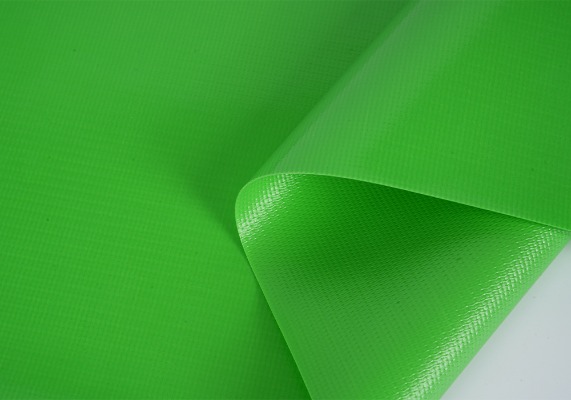
A structured selection process reduces the risk of overspending on unnecessary strength or underbuying for demanding use. The steps below can be applied by a manufacturer choosing material for a new product line or by a rental company refreshing its fleet.
Price is easy to compare, but it reveals little about the reliability of a material. A supplier with steady production processes, documented testing, and clear communication is usually a safer partner than one that offers the lowest quotation without data. The questions below help separate consistent producers from those who rely on informal control.
The sample test table below can serve as a basic checklist when evaluating material before a bulk order. Run the same tests on samples from at least two suppliers to make the comparison meaningful.
| Test | What it reveals | Practical sign of quality |
|---|---|---|
| Tensile strength | Load capacity of the base structure | Consistent results across several cuts |
| Tear resistance | Behavior when a small cut appears | Tear spreads slowly and predictably |
| Coating adhesion | Bond between coating and base fabric | No lifting or separation after repeated folding |
| Air retention | Sealing quality of the coated sheet | Stable pressure over an extended test period |
| Weld strength | Quality of seams made under heat | Seam holds without peeling or scorching |
Even a well-specified fabric benefits from disciplined care. Simple routines can prevent small problems from becoming structural failures, and they help rental operators protect their investment across many events.
Cleaning deserves special attention. Harsh solvents and abrasive brushes can damage the coating and reduce its UV protection. Mild soap and water applied with a soft cloth are usually sufficient. Folding technique also matters, since sharp creases in the same location gradually weaken the coating. Rolling the unit loosely and changing the folding pattern between events reduces stress concentration.
It is usually a woven polyester base fabric coated on both sides with PVC. The polyester provides strength and dimensional stability, while the coating makes the sheet air-tight, water resistant, and more durable against sunlight.
Many commercial bounce houses use fabrics in the range of roughly 550 to 650 gsm, while heavy duty rental units and water structures often move toward 650 to 900 gsm. The right choice depends on how often the unit is set up, how many users it serves, and how far it travels.
A thicker and more uniform coating reduces diffusion through the fabric and improves sealing. However, coating quality matters as much as thickness, because uneven application can create weak spots even when the average build appears adequate.
Requirements depend on the destination market and the type of venue. Public and commercial installations often require documented flame behavior, while some private or light use products may have fewer obligations. Confirm the applicable requirements before ordering.
Request samples from the same production run as the intended order, perform tear, adhesion, air retention, and weld tests in-house, and ask for third-party reports where available. Comparing results across several cuts from the same roll gives a clear picture of consistency.
Service life varies widely with use intensity, climate, storage habits, and fabric specification. Well-made commercial products that are cleaned, dried, and stored correctly can remain in service for several years, while neglected units may show problems much earlier.
 Anti Fouling Weatherproof Tarpaulin For Swimming Pool Cover
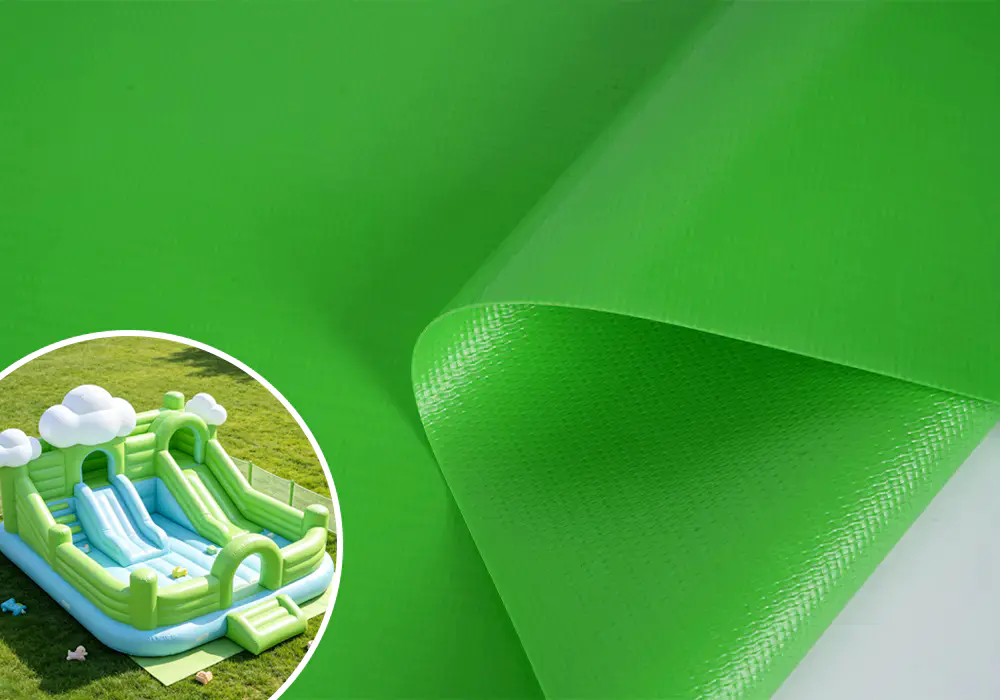 Soft Safe PVC Tarpaulin For Kids Inflatable Castle
 All Weather Heavy Duty Mesh Tarpaulin for Barrier Fencing
 Anti UV Long Lasting Blackback Outdoor flex Banner Fabric
 Thick Vivid Color Commercial Flex Banner Display Cloth
 Clear Liquid Isolation Sterilizable Tarpaulin For Medical Application
 Custom Digital Printing Fabric Manufacturers
 Previous