

 English
  中文简体
中文简体  Español
 News
Home / News / Industry News / How Long Do Prints on Lightweight Inkjet Cover Flex Banners Last Under Sunlight Exposure?


Content
Direct conclusion: Under direct, continuous sunlight exposure, standard lightweight inkjet cover flex banners typically last between 6 to 12 months before noticeable fading, yellowing, or material degradation occurs. For outdoor applications in high-UV regions (e.g., southern latitudes or high altitudes), the functional lifespan reduces to roughly 4–8 months without specialized overlaminates. The key determinants are UV stabilizer content, ink type (pigment vs. dye), and the weight/coating of the flex banner substrate. For long-term outdoor use (over 2 years), lightweight inkjet cover flex banners are not recommended unless paired with UV-blocking laminates or limited to seasonal displays.
This timeframe is based on accelerated weathering tests correlating to real-world sunlight exposure (approx. 100–150 kJ/m² cumulative UV dose). After the 9-month mark, many uncoated lightweight flex banners exhibit 40–60% loss in tensile strength and color shifting, particularly in cyan and yellow inks. Understanding these variables helps printers and signage professionals select appropriate substrates and plan replacement cycles.
The actual longevity of lightweight inkjet cover flex banners under sunlight exposure depends on a combination of material science and environmental conditions. Below are the influential parameters with specific data points for practical assessment.
Lightweight inkjet cover flex banners often incorporate HALS (Hindered Amine Light Stabilizers) and UV absorbers. Banners with high-concentration UV inhibitors (above 1.5% additive load) can extend outdoor life up to 12-15 months, whereas economy grades with <0.5% additives degrade within 3–5 months. Standard commercial-grade lightweight flex banners typically retain ~70% of original tear strength after 6 months of full sun.
Dye-based inks are inherently more prone to photochemical breakdown. On lightweight flex media, dye inks lose 50% color density within 90 days of equatorial sunlight. In contrast, pigment-based UV-curable or eco-solvent inks maintain >80% color vibrancy for at least 9 months. For banners intended to survive more than one season, specifying pigment inks is a baseline requirement.
Typical lightweight inkjet cover flex banners weigh between 180 gsm and 300 gsm. Heavier variants near 280–300 gsm provide slightly better UV resilience because thicker calendered facesheet slows oxygen/UV penetration. Additionally, microporous coatings can accelerate fading: uncoated matte finishes generally resist UV longer than glossy high-porosity coatings due to reduced light scattering and surface degradation.
In regions with average daily UV index >7 (e.g., Mediterranean, subtropical zones), lightweight flex banners fade twice as fast as in temperate climates (UV index 3–5). South-facing vertical banners receive about 30% more cumulative irradiation compared to north-facing ones. Horizontal tensioned banners (e.g., awning-style) degrade even quicker due to rain pooling and higher direct incidence angles.
The following table summarizes expected outdoor durability for lightweight inkjet cover flex banners under continuous sunlight exposure based on industry accelerated aging (ASTM G155 cycles) and field observations. Values represent time until noticeable fading (ΔE>5) or mechanical weakness.
| Banner Type / Quality Level | Typical UV Additives | Expected Sunlight Lifespan (months) | Key Failure Mode |
|---|---|---|---|
| Economy Lightweight Flex (180-210gsm, dye inks) | Minimal / none | 2–4 months | Severe fading, ink bleeding |
| Standard Lightweight Cover Flex (solvent/pigment, 220gsm) | Basic UV package (~0.8%) | 5–8 months | Color shift, surface chalking |
| Premium Lightweight Flex (260-300gsm, UV-stabilized) | High HALS + absorbers (>1.8%) | 10–14 months | Gradual fading, edge embrittlement |
| With UV Overlaminate (clear vinyl laminate) | External sacrificial layer | 18–24 months | Laminate delamination |
Note: The data above assume full South-facing exposure (temperate zone, 45°N). For high-UV locations, reduce estimates by 30–40%. Lightweight inkjet banners not designed for continuous outdoor use will rapidly lose ink adhesion and tensile properties.
Even if your lightweight inkjet cover flex banner has moderate UV resistance, implementing practical measures can meaningfully increase visible lifespan. The following recommendations are based on field feedback from sign installers and material scientists.
Adding a UV-blocking overlaminate film (2–3 mil thickness) can double the banner’s sunlight durability. Without lamination, lightweight flex rarely exceeds one year; with lamination, many banners survive 18–24 months. Liquid UV coatings (solvent-based) also provide additional UV absorption but add weight. For seasonal banners, this investment is cost-effective.
Always request pigmented, UV-resistant inks (outdoor-rated eco-solvent, latex, or UV-curable). Dye-sublimation onto lightweight flex is not recommended for direct sun because color loss accelerates within 60 days. Furthermore, printing with higher ink density (2–3 passes of CMYK) improves colorfastness – increased pigment loading resists photobleaching.
Install banners facing north or under eaves/partial shade when possible. Studies show that even 30% shade reduces UV damage rate by ~45%. For tensioned displays, consider using breathable mesh backing or creating an air gap behind the banner to reduce heat buildup, which accelerates polymer oxidation. Heat combined with UV causes embrittlement 60% faster than UV alone.
For professional signage that requires consistent brand appearance, replace lightweight flex banners every 6–8 months in sunny climates. For temporary events (3 months or less), economy grades are acceptable. Always monitor for white chalky residue (TiO2 degradation) – once chalking appears, tensile strength drops below 50% of original value.
Expected outdoor exposure < 4 months?
→ Economy flex + dye ink acceptable
Need 4–9 months of vibrant print?
→ Standard lightweight flex + pigment ink + UV additives
Require 10–18 months durability?
→ Premium flex (280gsm+) + UV overlaminate mandatory
More than 2 years outdoor?
→ Switch to heavy-duty banner (e.g., PVC mesh, 500gsm+), not lightweight cover flex
Following this flowchart helps avoid premature failure and aligns substrate choice with real sunlight exposure requirements. Lightweight inkjet cover flex banners are ideal for campaigns up to 12 months with proper protection, but beyond that, heavier architectural fabrics or reinforced PVC banners become necessary.
Understanding degradation mechanisms helps diagnose early signs and plan maintenance. Sunlight triggers three primary failure modes in lightweight inkjet cover flex banners:
Heat exacerbates each mechanism: surface temperatures of dark-colored banners can exceed 75°C (167°F) under direct sun, accelerating UV reaction rates by a factor of 2–3 per 10°C rise. Therefore, lightweight flex banners with light-colored prints generally last longer than dark, high-density designs.
Lightweight inkjet cover flex banners offer cost-to-performance for short to mid-term outdoor displays (<9 months). For longer campaigns, incorporate UV laminates, pigment inks, and a replacement schedule aligned with seasonal UV peaks. Always request technical datasheets indicating accelerated weathering test results: a reputable flex banner should withstand 400–600 hours of QUV (UVA-340) exposure with less than ΔE 5 change. When durability is non-negotiable, select heavier-gauge banner materials engineered for 24+ months of sunlight exposure, acknowledging that lightweight variants prioritize handling and cost over longevity.
Ultimately, understanding the specific UV index of your location, proper substrate selection, and proactive maintenance will maximize return on investment while maintaining vibrant graphics. For operations near equatorial zones, always reduce expected longevity by 40% compared to manufacturer claims. Plan accordingly.
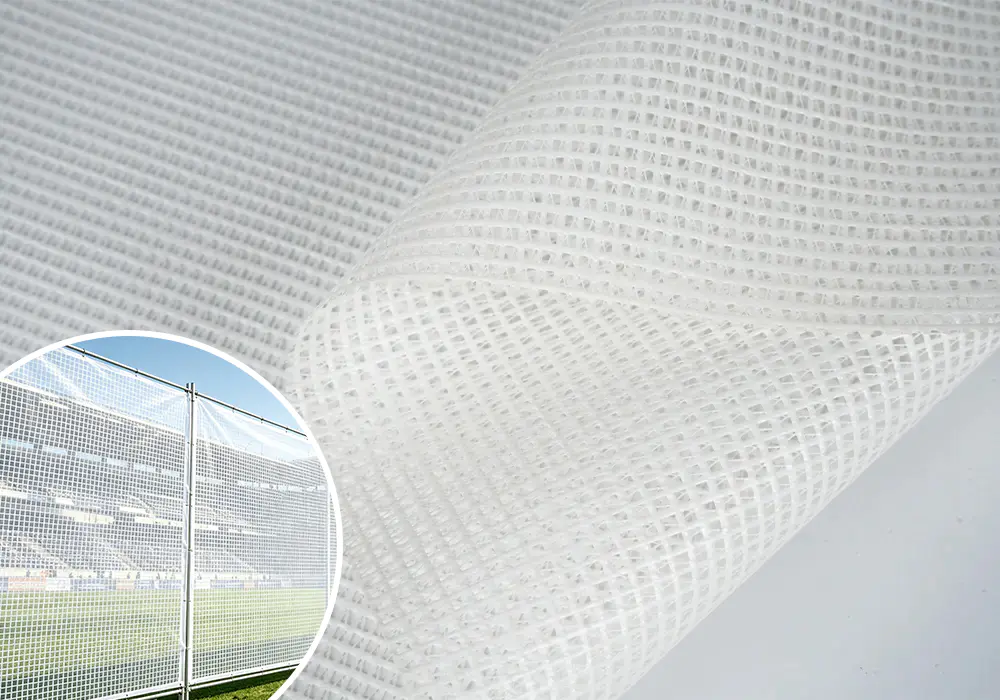 Lightweight Foldable Mesh Tarpaulin for Event Promotion
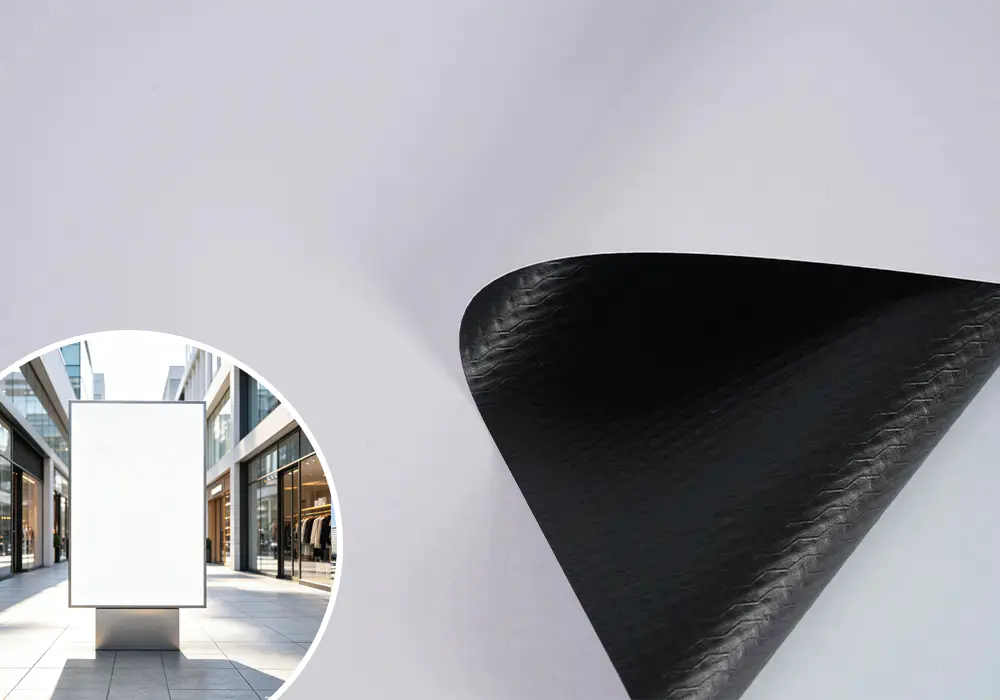 Anti UV Long Lasting Blackback Outdoor flex Banner Fabric
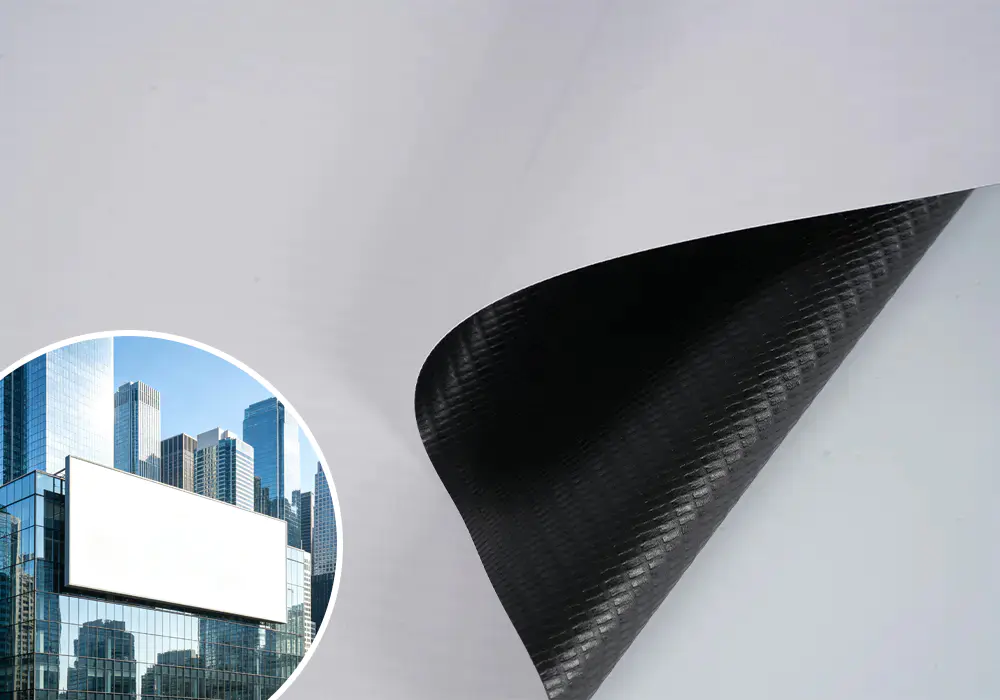 High Ink Absorption Blackback Commercial Promo Flex banner Material
 High-Resolution Durable PVC Flex Banner
 Large Format Transparent Lightweight inkjet cover Flex Banner
 Flexible Wear Resistant PVC Tarpaulin For Luggage Bags
 Custom Digital Printing Fabric Manufacturers
 Previous