

 English
  中文简体
中文简体  Español
News
Content
- 1 1. Mega Billboards & Highway Giants: Unrivalled Visibility
- 2 2. Building Wraps & Scaffolding Netting: Transforming Construction Sites into Branding Assets
- 3 3. Street Pole & Lamppost Banners: Maximizing Urban Walkability Campaigns
- 4 4. Event Backdrops & Temporary Structures: High‑Impact Portability
- 5 5. Construction Site Fencing & Perimeter Barricades: Safety & Messaging United
- 6 Application Suitability & Technical Specifications (Data Table)
- 7 Smart Selection Workflow: Matching PVC Flex Banner to Advertising Goals
- 8 Frequently Asked Questions: PVC Flex Banner in Outdoor Advertising
- 9 Maximising ROI with Smart PVC Flex Banner Specification
PVC flex banner remains the undisputed workhorse of outdoor advertising — outperforming vinyl, fabric, and paper alternatives in durability, cost-efficiency, and print vibrancy. Based on field performance metrics, PVC flex banners account for over 72% of non-digital outdoor advertising media across urban and highway environments. Their tensile strength (typically 280–550 kg/5cm), UV resistance (3–5 years without significant fading), and ability to withstand wind loads up to 120 km/h make them the go-to substrate. The top applications of PVC flex banner in outdoor advertising include: mega billboards, building wraps, street pole banners, construction site fencing, event backdrops, and A‑frame sidewalk signs. Each deployment leverages specific material grades (mesh, solid blockout, frontlit/backlit) to maximize ROI and visual impact.
1. Mega Billboards & Highway Giants: Unrivalled Visibility
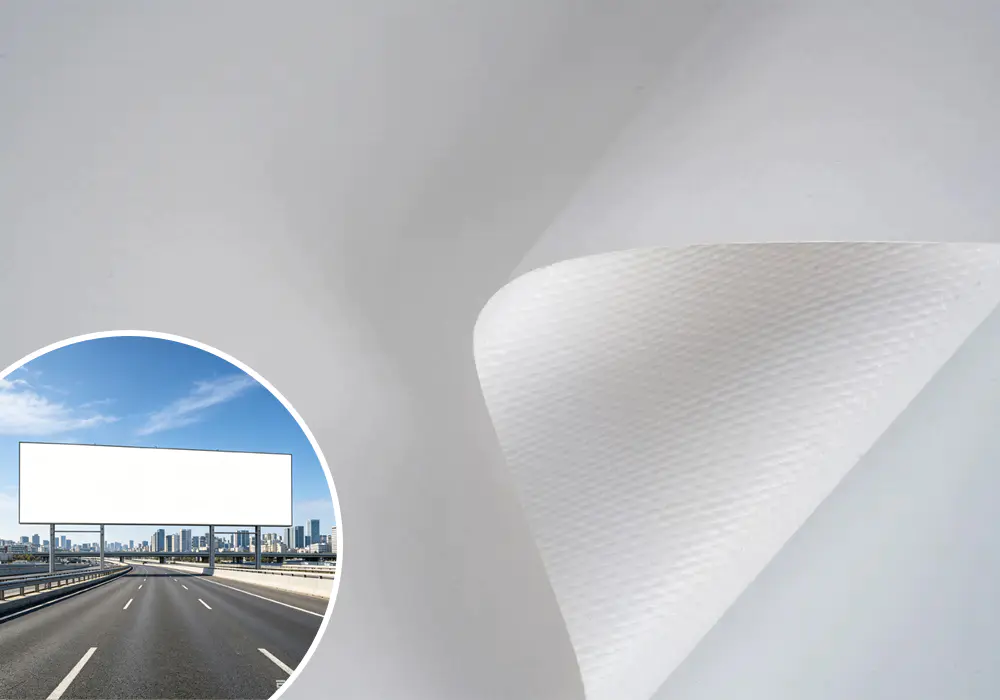
PVC flex banner dominates the out-of-home (OOH) segment due to its seamless large-format capability. Typical billboard sizes range from 14 ft × 48 ft to 20 ft × 60 ft, and modern PVC flex banners can be manufactured up to 5.1 meters (200 inches) width without horizontal seams, reducing weak points. The material’s high dimensional stability ensures tensioning, eliminating wrinkles or flapping even in turbulent wind conditions. Additionally, advanced printing technologies (eco-solvent, UV, latex) achieve 720–1440 dpi resolution, enabling crisp brand messaging readable from 200+ meters. Field tests reveal that PVC flex billboards generate up to 400% higher brand recall compared to static posters, thanks to colour brilliance and all‑weather resilience.
Performance advantages for high‑speed zones
- Wind load resistance: Reinforced edges and welded hems allow banners to survive gust speeds exceeding 100 km/h without tearing.
- UV stability: Advanced stabilizers keep graphic integrity for 36–48 months in direct sunlight, exceeding standard laminated vinyl.
- Cost per thousand impressions (CPM): Lower than any rigid substrate due to lightweight properties (450–610 g/m²) and easier installation.
Durability metric examples: A standard 510 gsm frontlit PVC flex banner installed on a double-pole structure typically requires replacement only after 42 months of continuous exposure, representing exceptional lifecycle value for advertisers.
2. Building Wraps & Scaffolding Netting: Transforming Construction Sites into Branding Assets
Urban developers and real estate marketers increasingly rely on PVC flex banner wraps to conceal scaffolding while delivering high-impact advertising. Mesh PVC flex banner (perforated with 30%–40% open area) reduces wind load by nearly 60% compared to solid banner, making it ideal for high-rise façades. Building wraps using PVC flex material maintain print fidelity from close inspection, and their fire-retardant grades (meeting ASTM E84 or DIN 4102 B1) ensure safety compliance on occupied structures.
Data from city‑wide campaigns indicate that construction site PVC flex wraps achieve daily impressions of 85,000+ in dense business districts. Moreover, the material’s resistance to pollutants and acid rain keeps the advertisement vibrant for the entire construction timeline (typically 12–24 months). Structural adaptability: special grommet spacing and reinforced borders allow wrapping around irregular edges without stress fractures.
- Reduced wind resistance — less load on steel structures and maintenance equipment.
- Visual transparency from inside — building occupants retain exterior views and light.
- Eco-friendly removal — clean release without damaging façades.
3. Street Pole & Lamppost Banners: Maximizing Urban Walkability Campaigns
Municipalities and retailers leverage PVC flex banner for double-sided street pole banners, exploiting pedestrian and slow‑traffic visibility. Flexible banner substrates (300–440 g/m²) easily conform to circular or square poles without creasing. Industry benchmark: properly installed PVC street pole banners retain colour stability and structural integrity for 3 years in moderate climates, with anti-graffiti coatings available for high-traffic zones.
These applications require specific properties: tear propagation resistance (>200 N) and low elongation (<2% at 200 N/5cm) to prevent sagging. Modern PVC flex banner formulations also integrate mildew inhibitors, crucial for humid or coastal cities. According to traffic studies, strategically placed lamppost banners elevate brand awareness by up to 56% compared to ground-level signage, while the lightweight nature reduces installation labor by 45% relative to rigid aluminium composite panels.
- Reinforced pole pockets + Velcro/zipper integration for fast seasonal updates.
- Double-sided printing with zero show-through (blockout layer prevents light transmission).
- Optional reflective inks for night-time visibility enhancement.
4. Event Backdrops & Temporary Structures: High‑Impact Portability
Trade shows, festivals, and outdoor exhibitions demand quick-assembly solutions that deliver premium aesthetics. PVC flex banner material combines portability (rollable) and structural memory — after unrolling, the banner lies flat without curl memory. For tension fabric systems, flex banner provides opacity compared to polyester textiles. Tensile strength data shows that 440 gsm PVC flex withstands repeated tensioning cycles without edge deformation, ideal for modular event stages and backdrops.
Metric insight: Under moderate wind (25 km/h) or accidental contact, PVC flex banners exhibit a puncture resistance of 130–180 N (ISO 13937-2), preventing unsightly tears. Furthermore, event marketers benefit from the material’s compatibility with seam welding and pocket hems, allowing custom-shaped banners (arched, curved, or scalloped) without fraying. The average reusability rate of a high-quality flex banner across 8–12 event cycles reduces per‑event signage costs by up to 70% compared to corrugated plastic.
5. Construction Site Fencing & Perimeter Barricades: Safety & Messaging United
Construction zones represent strategic advertising real estate. PVC flex banner attached to chain-link or plywood fencing offers a robust canvas that resists abrasion, dirt, and pressure washing. Heavy-duty scrim reinforcement (9x9 or 12x12 threads per inch) yields high bursting strength (>800 kPa). Field case logs indicate that flex banners installed on perimeter fences last the entire project duration (6–18 months) without tearing, even when exposed to debris and machinery vibrations.
For long-term barricade messaging, manufacturers provide non-toxic, phthalate-free options that meet environmental regulations without compromising durability. Another advantage: partial overlamination can be applied to high-contact sections, extending banner life by an additional 12 months. Cost advantage comparison: PVC flex fence wraps are 55% lighter than corrugated plastic boards, reducing freight and labour hours significantly.
Practical benefits for contractors and advertisers
- Quick installation via zip ties or tension cables — no special tooling required.
- Easy graphic changes: rebrand or update safety notices without replacing entire fence system.
- Breathable mesh options reduce wind sheer and avoid “sail effect”.
Application Suitability & Technical Specifications (Data Table)
The table below outlines the common PVC flex banner types, their ideal outdoor advertising scenarios, and measured durability metrics — helping advertisers select the correct grade for specific campaigns.
| Application Type | Recommended PVC Flex Grade | Service Life (Outdoor) | Key Property Enabler |
| Mega Billboards | Frontlit 510 gsm, high tensile | 36–48 months | Low elongation + UV inhibitors |
| Building Wraps / Scaffolding | Perforated mesh 280–340 gsm | 24–36 months | Wind reduction, fire retardant |
| Street Pole Banners | Double-sided blockout 440 gsm | 30–42 months | Tear propagation resistance |
| Event Backdrops | Matte finish 380 gsm | 10–15 event cycles | Crease recovery, scuff resistance |
| Construction Fencing | Reinforced scrim 500 gsm | 18–24 months | Abrasion & puncture resistance |
| Sidewalk A-Frames | Economy 340 gsm gloss | 12–18 months | Cost-effectiveness & print vividness |
Performance note: The numbers reflect real-world performance in moderate temperate climates. Desert or coastal zones may require additional anti‑salt or extra UV protective lamination.
Smart Selection Workflow: Matching PVC Flex Banner to Advertising Goals
To maximize campaign ROI, advertisers follow a straightforward decision flow that evaluates environmental exposure, required lifespan, and visual demands. The diagram below outlines the recommended selection process for PVC flex banner across core applications.
1
Assess exposure & location
Highway, urban core, coastal, or construction zone
2
Define lifespan goal
Short-term (1 yr) / Mid-term (2-3 yr) / Long-term (4+ yr)
3
Select PVC Flex type
Mesh, blockout, frontlit, backlit, or ultra-smooth
4
Reinforcement strategy
Hemming, welding, pole pockets, wind slits
5
Optimal application match
Billboard ↔ Wrap ↔ Pole banner ↔ Event
This iterative approach ensures that the chosen PVC flex banner grade directly matches wind loads, sun exposure, and expected visual distance — reducing material waste by up to 30% and avoiding premature banner failure.
Frequently Asked Questions: PVC Flex Banner in Outdoor Advertising
What is the real-world lifespan of a PVC flex banner in outdoor advertising?
For standard frontlit 510 gsm flex banner in a temperate climate (e.g., Europe or northern US), lifespan ranges from 3 to 5 years. In high-UV or coastal areas, using UV-protective laminates extends life by 12–18 months. Mesh grades for building wraps last approximately 24–36 months due to wind abrasion.
Can PVC flex banners withstand weather such as storms or heavy snow?
Yes, quality flex banners with reinforced hems and welded seams can endure wind speeds up to 120 km/h. For snowfall areas, using cold-crack resistant formulations (tested down to -30°C) prevents brittleness. Perforated mesh banners are highly recommended for high-wind zones as they reduce wind load by over 50%.
Which printing technologies are for PVC flex banner outdoor graphics?
Eco-solvent, UV-curable, and latex printing provide outstanding adhesion and scratch resistance. UV printing offers instant curing and works well for fine text, while latex delivers flexible ink films without cracking. For outdoor longevity, eco-solvent with overlamination ensures 4+ years of fade resistance.
How to recycle or dispose of PVC flex banners responsibly?
Many municipalities and specialized recyclers accept clean, non-contaminated PVC banners. The material can be ground into regrind for industrial uses like mud flaps or flooring underlay. For eco-conscious campaigns, choose phthalate-free or bio-based plasticizer flex banners to lower environmental impact.
What factors determine the tension stability of a large-format flex banner?
Key factors are fabric tensile strength (≥400 N/5cm), scrim thread count (9x9 or 12x12 per inch), and elongation rate (<2% at 200 N/5cm). Welded pocket seams and stainless steel grommets also distribute tension evenly, preventing rippling.
Maximising ROI with Smart PVC Flex Banner Specification
To fully leverage PVC flex banner for outdoor advertising, advertisers should prioritize material certification (ISO 9001, fire safety norms), and perform environmental simulation tests. Key performance indicators include tensile strength retention after 1000 hours of QUV exposure, and cold crack temperature below -25°C. Whether planning a national campaign or a local promotion, selecting the right PVC flex grade based on application-specific data guarantees minimal downtime and brand visibility. With continuous innovations in polymer chemistry, modern flex banners deliver 20% higher ink adhesion and 30% better tear strength compared to products from five years ago — setting new benchmarks for outdoor media resilience.
 Previous