

 English
 中文简体
 Español
News
Home / News / Industry News / Why Dense Weave Light Block Mesh Tarpaulin Outperforms Standard Mesh in Commercial Display


Content
Buyers who search for mesh tarpaulin usually start with a simple requirement: a large sheet that lets wind pass through while carrying a printed image or message. Many products sold under that label, however, struggle once they are used for serious display work. Three problems come up again and again. The first is see-through. When a printed design hangs over a fence or scaffold, the openings in an ordinary mesh let the background show, and a crisp logo turns into a grey, washed-out shape. The second is tearing, which usually begins at grommets and corners where installers pull hard on ropes or cable ties. The third is edge fatigue, where hems and eyelets wear down after repeated folding, transport and reinstallation.
These failures are not random. They come from structural choices made at the weaving stage. A coarse mesh with wide apertures ventilates well but gives the printed face very little to sit on. A tighter, denser construction does the opposite. For commercial display, the practical goal is a balance: enough light blocking to keep artwork clean, enough air passage to avoid overloading the frame, and enough tensile and tear strength to survive real installation habits. The sections below explain how a dense weave light block product approaches that balance, how to read its specification sheet, and how to plan an order that performs as expected on site.
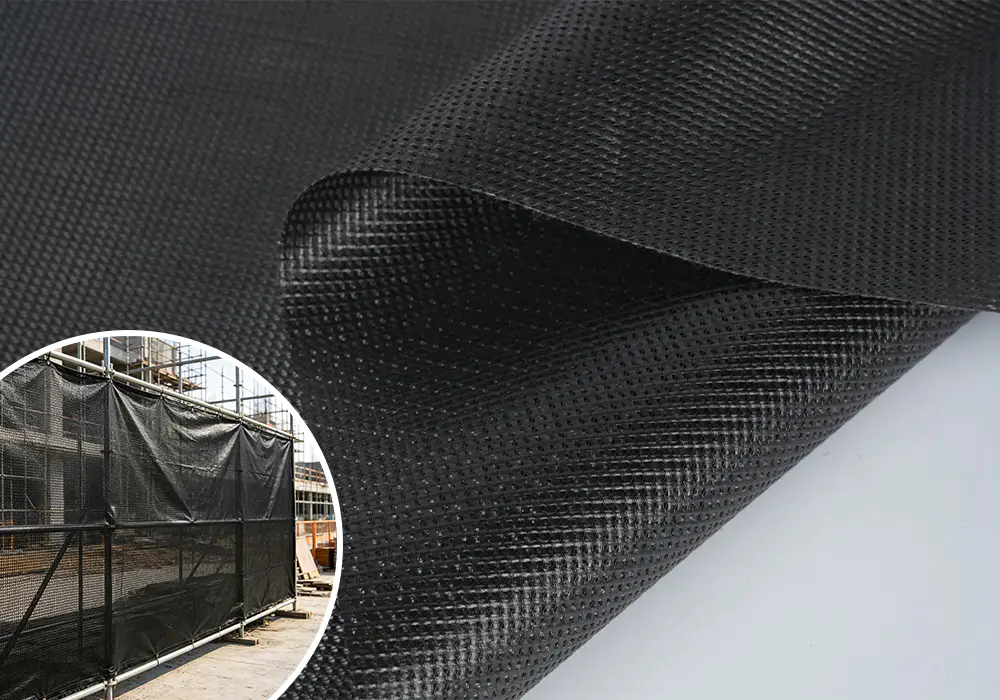
Opacity in a mesh fabric depends mainly on aperture size relative to viewing distance and to the light behind the material. A standard mesh may have openings large enough that a viewer a few meters away can see straight through a printed panel. A dense weave mesh tarpaulin reduces the open area substantially while keeping openings uniform in size and spacing. The eye then reads the surface as a single plane rather than a grid of holes, which keeps type and graphics sharp even at moderate distances.
Airflow works on a different principle. Wind passes through openings, not through solid yarn, so it might seem that smaller openings would hinder ventilation. In practice, the number of openings and how evenly they are distributed matter as much as their size. A well balanced weave lets air move through the whole sheet and spreads pressure across the surface instead of concentrating it at a few weak points. Engineers often describe this as a porosity target rather than a single figure, because the result depends on the yarn, the weave pattern and the surface coating working together.
The diagram illustrates the core difference. Standard constructions favor ventilation at the cost of print clarity, while dense weave keeps the surface visually solid and still permits steady air movement.
The table below summarizes how the two constructions typically compare in day to day use.
| Feature | Standard mesh | Dense weave light block |
|---|---|---|
| Aperture size | Large and irregular | Small and uniform |
| Light transmission | High | Low |
| Print clarity at distance | Reduced by background | Sharp and consistent |
| Wind pass-through | Very high | Moderate and evenly spread |
| Stress at eyelets | Often concentrated | Shared by reinforced hem |
Light block describes how much light the fabric stops, not how much water it keeps out. Treat these two properties separately when comparing products.
A specification sheet is only useful when you know which figure predicts which failure. The reference figures discussed here belong to a typical dense weave light block product built from 1000 denier yarn in a 12 by 12 weave count, with a coated surface at about 260 grams per square meter.
Tensile strength describes how much pull the fabric can take along a line before it breaks. The reference values are 1300 N in the warp direction and 1200 N in the weft direction. The small gap between directions is normal for woven fabric and suggests balanced construction. Installers pull hardest along the length of a banner when tightening it between two posts, so the warp figure deserves the most attention on long spans.
Tear strength is a different property. It measures how easily a tear spreads once it has started, which is exactly what happens at a grommet or a cut corner. The reference values of 400 N in the warp and 380 N in the weft indicate that a small nick is unlikely to run across the panel under normal tension. For many buyers this is the decisive number, because replacing a torn banner during an event is costly and highly visible.
At 260 gsm the material sits between very light sheeting and heavy waterproof tarpaulin. Lighter fabrics fold easily but flutter in gusts, while heavy coated fabrics resist wind because they present a solid surface with no ventilation. The middle weight suits repeated rental use: it tolerates rolling and unrolling between jobs, and a two person crew can still lift a large panel onto a fence without mechanical help.
Good product selection starts with the scene. The same fabric can be a sound choice in one setting and a poor one in another. The following applications show where a dense weave light block mesh tarpaulin earns its place.
Beyond the application, site conditions shape the right choice. The table below lists factors worth reviewing before requesting quotes.
| Site condition | What to check | Why it matters |
|---|---|---|
| Exposure to sun | Hours of direct light per day | Long exposure affects color retention and coating life |
| Prevailing wind | Direction and typical gust strength | Determines eyelet density and frame bracing |
| Mounting height | Distance from ground to top edge | Higher panels catch stronger wind |
| Viewing distance | Average distance of the audience | Affects required print resolution |
Mesh is chosen because it lets wind through, but it still transfers load into the frame, the anchors and the attachment points. Good installation starts by assuming the most exposed direction on site and planning the fixings around it. Many failures happen not because the fabric is weak but because the frame was undersized or the eyelets were spaced too far apart for the gust conditions.
A practical installation checklist includes the following steps.
A mesh panel that moves gently is usually healthier than one pulled perfectly taut. Controlled movement spreads stress, while rigid fixing concentrates it at the eyelets.
The coating on the front face determines how ink sits on the fabric. An absorbent coating allows solvent or UV inks to bond cleanly, while a poorly matched surface can cause bleeding, banding or color shift. Dense weave fabric is generally suited to large format inkjet work, but the result depends on the ink type, the print resolution and the finishing step, so it helps to discuss these with your print partner before committing to a full run.
Resolution expectations are often overstated. Because the audience usually views a banner from several meters away, a moderate resolution is typically adequate, and very high settings add print time without visible benefit at that distance. Ask for a proof on the actual fabric rather than on paper, since color and sharpness appear differently beneath the coating and the light block layer.
Design files should include a bleed margin and mark the eyelet positions in the layout, so critical graphics are not hidden behind a grommet or pulled into the hem.
Most large orders involve some degree of customization. Dimensions, eyelet spacing, hem reinforcement and packaging can all be adjusted to suit the project. Customization works best when it is specified early, because changes after production starts add time and cost.
For repeat clients, standardizing these parameters across projects simplifies reordering and keeps installation crews familiar with the same hardware. A consistent specification also makes it easier to compare performance from one season to the next.
A clear brief shortens the quoting process and reduces the chance of rework. Before requesting pricing, gather the following in one document: final dimensions for each panel, the number of panels, the print file format and resolution, the installation environment, the required quantity and the delivery window. Experienced suppliers usually ask for these details anyway, so having them ready speeds up the exchange.
Once the specification is confirmed, a production sample is the most reliable way to check color, hand feel and hardware. It also reveals issues such as eyelet placement that look fine on a drawing but interfere with artwork on the finished panel.
A display fabric that is cleaned and stored correctly will look better and last longer than one left folded in a damp corner. Because the cost of a panel is spread across every event it attends, lifecycle performance often matters more than the price on the day of purchase.
Dust and grime settle on the surface and gradually reduce contrast, especially on dark artwork. Cleaning with a soft brush and lukewarm water is usually sufficient. Harsh solvents, close range pressure washing and abrasive pads can damage the coating and should be avoided. Allow the panel to dry fully before folding, since trapped moisture encourages odor and mildew.
Store panels rolled loosely rather than tightly creased, and keep them away from direct sunlight and sharp objects. Rolling around a large diameter core reduces stress on the hem and the coating. Label each roll with its dimensions and artwork version so the right panel is ready when the next project starts.
Inspection is the cheapest form of maintenance. After each installation, check eyelets for bending, look along the hem for fraying and confirm that ties have not worn through at contact points. Small repairs made early are far simpler than replacing a panel in the middle of an event.
Experience across many installations points to a few recurring errors. Avoiding them costs little and protects both the display and the budget.
The questions below address the points that come up most often during specification discussions.
No. Its primary function is to reduce light transmission while allowing air to pass through. It may shed light rain and resist UV exposure, but it is not designed to hold water. If the application requires full waterproofing, a coated solid tarpaulin is the better choice.
Yes. The front coating is designed to accept large format solvent and UV inks. Send your design file with final dimensions and bleed area, and request a proof on the actual material before production begins.
Yes. Spacing can be tightened along edges and corners where wind loads are highest, and reinforcement patches can be added at critical points. Share your expected wind conditions with the supplier so the layout can be matched to the environment.
It can be used in windy locations when the frame, anchors and eyelet layout are designed for the expected load. Because the fabric is ventilated, it places less load on the structure than solid sheeting, but it does not remove the need for proper engineering. For sites where a failure could affect people or property, review the plan with a qualified structural professional.
Service life depends on sun exposure, cleaning, storage and how often the panel is folded and reinstalled. Regular inspection of ties and edges, along with storing panels dry and out of direct light between events, helps extend their working life.
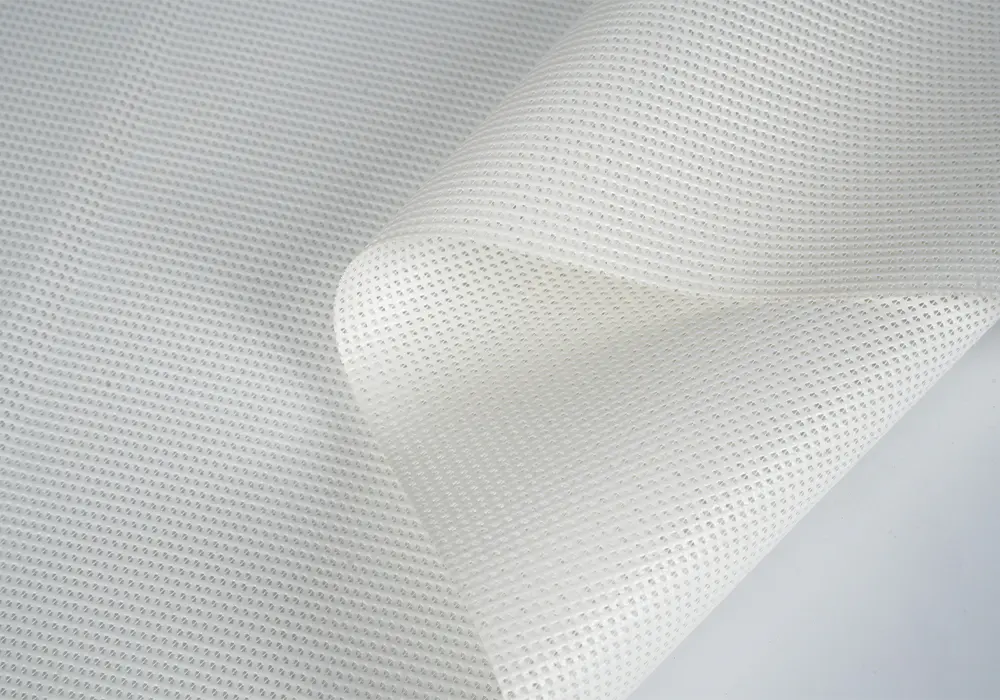 Dense Weave Light Block Mesh Tarpaulin for Commercial Display
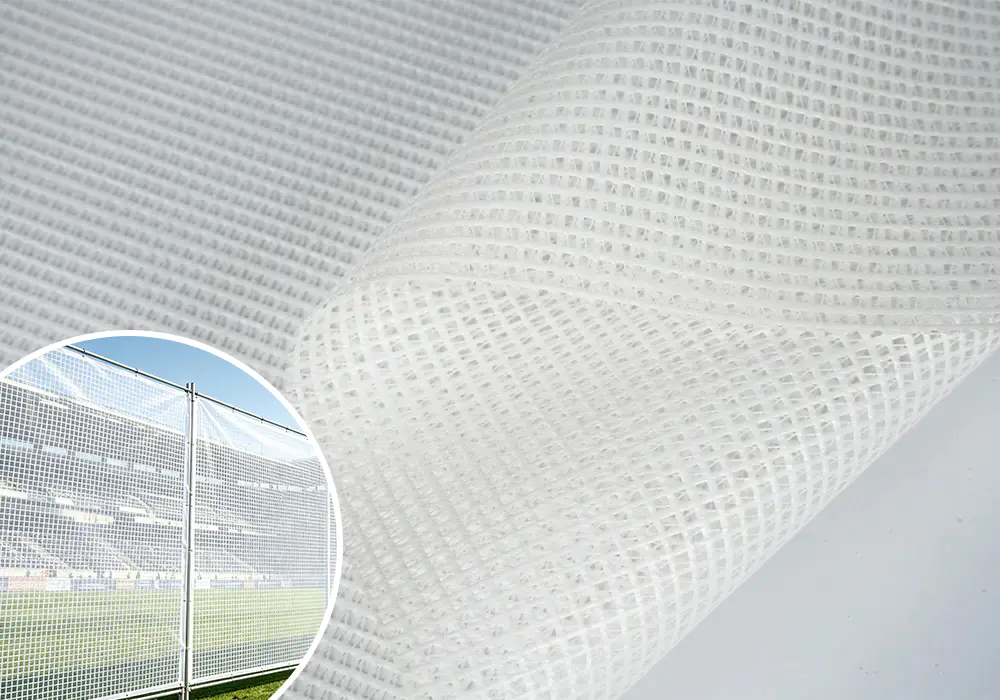 Lightweight Foldable Mesh Tarpaulin for Event Promotion
 Light Economical Liquid Proof Tarpaulin For Medical Nursing
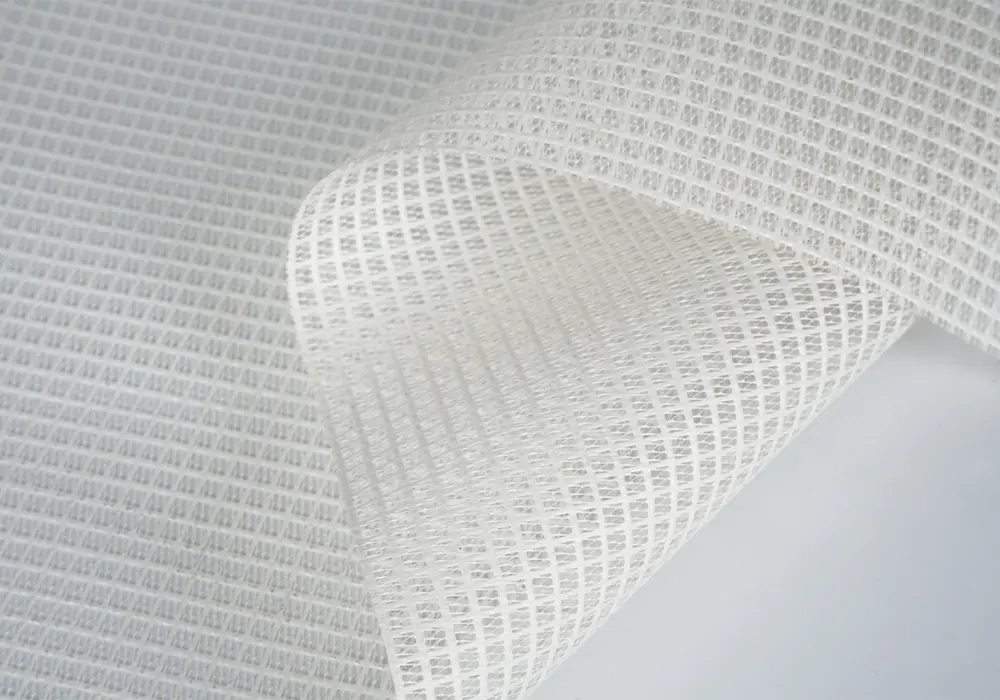 Breathable Wind Resistant Mesh Tarpaulin for Advertising
 All Weather Heavy Duty Mesh Tarpaulin for Barrier Fencing
 High Tensile Tear Proof Large Format Mesh Tarpaulin
 Custom Digital Printing Fabric Manufacturers
 Previous