

 English
 中文简体
 Español
News
Home / News / Industry News / Why Even Light Transmitting Backlit Flex Banner Matters for Uniform Lightbox Displays


Content
Anyone who has walked past a glowing storefront at night has seen the difference between a well built lightbox and a poor one. The good ones look calm and even, with artwork that reads clearly from across the street. The poor ones show bright dots where each LED sits, dark bands between modules, or a hot center that fades into dim corners. These defects appear the moment the power is switched on, and they often define how the entire display is judged.
For sign makers and advertising buyers, uneven light is not a small cosmetic issue. It affects legibility, brand color perception, and client confidence. Rebuilding a finished panel costs time and money, so the face material chosen at the start of a project carries real weight. An Even Light Transmitting Backlit flex banner is designed to solve this problem at the material level, rather than relying only on more LEDs, thicker frames, or careful installation.
In many lightbox complaints, the artwork is not the real problem. The light path between the LED source and the viewer decides whether the image looks premium or unfinished.
This guide explains how even light transmitting backlit flex banner material works, which features matter in real projects, which specifications to check, and how to avoid the common mistakes that cause display problems after installation. The focus is practical: material behavior, print considerations, and selection criteria that help buyers and fabricators make confident decisions before production begins.
To understand uniformity, it helps to look at the layers in a typical backlit installation. Light enters from behind the panel, passes through a translucent PVC substrate, and reaches the viewer through the printed image. Each layer changes how the light spreads, and the final brightness pattern is the sum of all these effects.
Standard translucent materials often transmit light in a fairly direct way, so the brightness pattern closely follows the LED positions. An even light transmitting structure introduces controlled scattering inside the material. Instead of letting light pass straight through, the base spreads it across a wider area before it reaches the ink layer.
The practical result is a smoother brightness curve. Hot spots soften, and the gaps between LED modules become much less visible at normal viewing distances. Because the scattering is built into the substrate, performance stays consistent across the panel and does not depend entirely on the installer's ability to space light sources perfectly.
Even the best substrate can show uneven results if the print is too dense in some areas. Heavy ink blocks more light, so large solid colors look darker than photographic areas. Designers should avoid placing large dark masses directly over the brightest LED positions, and print operators should check ink density profiles that suit backlit viewing.
When comparing backlit materials, buyers often focus on price per square meter. A better approach is to evaluate how each feature affects the finished display. The table below summarizes the attributes that matter most for uniform lightbox performance.
| Feature | What It Means | Why It Matters |
|---|---|---|
| Even light diffusion | Controlled scattering inside the base | Reduces hot spots and LED pattern visibility |
| Flexible PVC base | Rolls, bends, and tensions without cracking | Easy transport, cutting, and frame fitting |
| Print compatibility | Works with UV, eco-solvent, and solvent inks | Supports sharp color and stable ink adhesion |
| Weather resistance | Tolerates moisture and temperature change | Suits long-term indoor and sheltered outdoor use |
| Dimensional stability | Limited shrinkage and stretch under tension | Keeps the image aligned inside large frames |
A material can look excellent in a sample swatch and still fail in a large light box. For this reason, it is worth testing a full-size section under the actual LED module and diffuser setup. Light uniformity is easiest to judge when the panel is switched on in a dim room, with the viewing distance matching the end use.
Dimensional stability is another overlooked factor. Large panels that stretch unevenly can show wrinkles or light bands after several weeks. A stable base keeps the artwork aligned and prevents the uneven brightness that often follows poor tension.
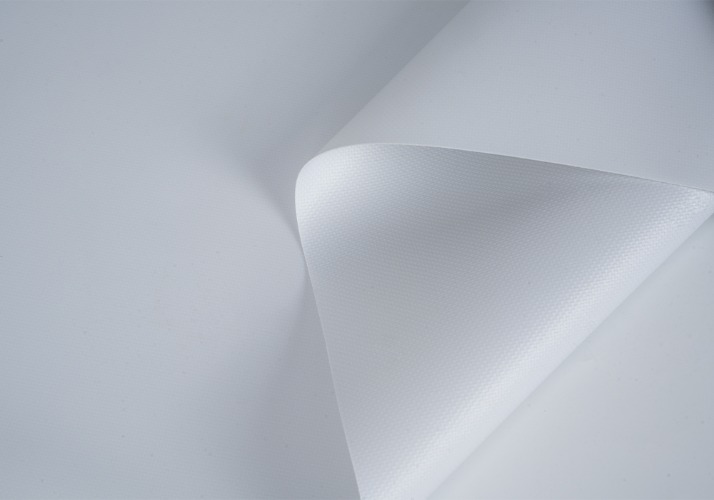
This material suits projects where the backlit surface must look clean from both close range and across a street. Its strengths show most clearly in environments where people spend time reading the display, or where brand colors must remain consistent from one panel to the next.
For multi-location brands, the greatest value often lies in consistency. When every store uses the same light performance, the brand looks coherent in every city, regardless of local installers.
Large light boxes amplify any unevenness, because the viewer sees more of the surface at once. Panels viewed from across a plaza or down a corridor are especially sensitive to brightness bands. Even light transmission helps keep the whole surface readable, so the design looks intentional rather than patchy.
Specifications vary by supplier, production method, and end use. The values below are typical reference ranges to help buyers prepare an inquiry. Final numbers should always be confirmed with a technical data sheet before a bulk order is placed.
| Parameter | Typical Reference | Notes |
|---|---|---|
| Base material | Translucent PVC flex | Designed for back illumination only |
| Weight | Commonly within a lightweight to medium range | Heavier stock suits large unsupported spans |
| Roll width | 1.07 m, 1.27 m, 1.52 m, 1.6 m, 3.2 m | Wider rolls reduce seams on big panels |
| Print method | UV, eco-solvent, solvent | Match ink type to machine and output needs |
| Surface finish | Matte or semi-matte | Reduces glare and fingerprints |
| Light setup | Back-lit LED systems | Not intended for front-lit installation |
Roll width deserves special attention. Every seam on a backlit panel is a potential visual interruption, and joins can show slight brightness changes. Choosing a width close to the panel dimension reduces splicing and gives a cleaner result.
Selection becomes simpler when the project requirements are written down before quotations are requested. The following sequence helps fabricators and buyers narrow the options quickly.
| Option | Best Suited For | Trade-off |
|---|---|---|
| Standard backlit flex | Budget projects with moderate uniformity needs | Possible visible LED pattern at close range |
| Even light transmitting backlit flex | Premium lightboxes and brand-critical displays | Requires careful print density planning |
| Backlit textile | Soft fabric looks and tension frame systems | Different light behavior and handling |
The right choice depends on what the viewer will notice first. If the display is judged mainly at close range, uniformity is critical. If it is a large, fast-moving advertisement, a lower-cost option may meet the goal. The table is a starting point, not a verdict.
Good material performance can be undone by poor production steps. The flow below shows a practical sequence that many fabricators use to keep backlit panels consistent from file preparation to final installation.
Reverse printing is standard for backlit use, so artwork must be mirrored before output. Designers should check that text remains readable from the viewing side. A simple proof on a light table can prevent costly reprints.
When stretching the banner into a frame, apply even tension across all edges. Over-stretching can thin the material and change light transmission in the stretched areas. Store rolls flat or loosely rolled in a dry area, and avoid sharp creases that may remain visible under backlight.
Most issues on installed lightboxes can be traced to a small number of causes. The table below groups common symptoms with likely sources and practical fixes, which can help fabricators respond quickly after installation.
| Problem | Likely Cause | Practical Fix |
|---|---|---|
| LED dots visible up close | Insufficient diffusion or wide LED spacing | Reduce spacing or add a diffuser layer |
| Dark bands across panel | Heavy ink in specific zones | Adjust artwork density and reprint test area |
| Wrinkles after installation | Uneven frame tension | Re-tension evenly from all sides |
| Color looks dull | Ink and substrate mismatch | Run print profile tests on the actual material |
| Edge brightness differs | Seam or edge overlap | Use wider rolls and align joins carefully |
Document each installation with a photo taken under the working light. This record makes future troubleshooting faster and helps establish consistent quality standards across projects.
It is used as the translucent face of backlit lightboxes, where it must display artwork evenly when illuminated from behind. Typical uses include storefront signs, transit advertising, exhibition graphics, and interior luminous displays.
The PVC base offers good resistance to moisture, but waterproof performance depends on the complete assembly, including seams, frame design, and sealing. Sheltered outdoor use is generally more suitable than fully exposed installation without protection.
Backlit materials are designed for reverse printing so the image reads correctly when light passes through the substrate. Front printing is not recommended for backlit installation because the artwork will appear mirrored and may look less vibrant.
Backlit flex is optimized for light passing through the material from behind, while frontlit flex is designed to be illuminated by external light on the viewing side. The two materials differ in opacity, ink behavior, and intended installation method.
It can be used in large outdoor lightboxes when combined with a suitable protective housing, proper sealing, and a frame that controls tension. Buyers should confirm the specific technical data sheet and environmental conditions before finalizing the design.
 Light Flexible Light Transmitting Flex Advertising Banner
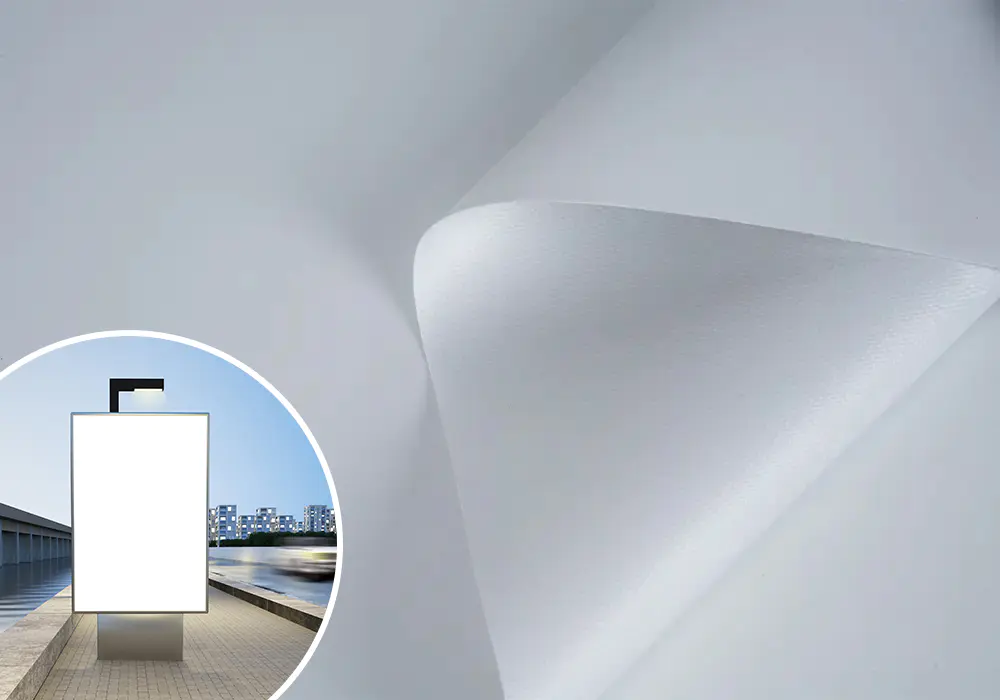 Even Light Transmitting Backlit flex banner
 Lightweight Foldable Mesh Tarpaulin for Event Promotion
 Waterproof Stretch Resistant Event Flex Banner Material
 Large Format Transparent Lightweight inkjet cover Flex Banner
 Blackback Light Block HD Printing Flex Banner Fabric
 Custom Digital Printing Fabric Manufacturers
 Previous