

 English
 中文简体
 Español
News
Home / News / Industry News / Extra Large Tarp for Industrial Use: Sizing, Specs and Selection Guide


Content
A tarp that measures ten metres by twenty is not simply a bigger version of a four by six cover. Every property that made the small cover convenient, its weight, its flexibility, its fixing pattern, turns into a design constraint once the surface area passes a few hundred square metres. Wind does not scale in a straight line, water pools in the middle of wide spans, and a single weak grommet can concentrate enough load to tear an entire hem open.
For industrial buyers the question is therefore not how large a panel can be made, but what has to change once it is that large. This guide sets out the technical decisions behind specifying an extra large tarp for industrial use: how size bands map to fabrication methods, which datasheet values actually predict field life, how seams and grommets should be laid out, and how to verify a batch before it leaves the factory. It is written for procurement engineers, site managers and fabricators who need a repeatable specification rather than a catalogue number.
The scale factor
Doubling the side length of a cover quadruples its surface area and its total weight, while the number of fixing points along the edge only doubles. Load per fixing point therefore climbs sharply with size, which is why fixing density, hem construction and seam quality matter far more on large panels than on small ones.
In trade use, extra large is rarely defined by one number, but three thresholds separate it from routine covers. The first is finished width beyond the standard roll width of the base fabric, which forces at least one welded joint. The second is a surface area that pushes finished weight past what two people can lift and unfold without mechanical help. The third is span: once a cover has to bridge a gap without intermediate support, the fixing design carries the load instead of the ground.
| Size band | Typical finished size | Fabrication approach | Handling requirement |
|---|---|---|---|
| Utility | Up to 4 m by 6 m | Single roll width, stitched or welded hem | One or two people |
| Large | 6 m by 12 m | Two panels joined, reinforced corners | Two to three people |
| Extra large | 10 m by 20 m | Four to six panels joined, rope-core hem | Four people plus a lifting aid |
| Project scale | Over 20 m span | Engineered anchorage, rigging plan | Telehandler or crane |
The practical consequence is that large panels are engineered products assembled from smaller roll goods. A coated fabric produced at 3.2 m roll width and joined into a 12 m sheet already carries four longitudinal welds before the hems are added. Each weld is a potential weak point and each hem is a potential water trap. Buyers should therefore read an extra large tarp datasheet as a fabrication specification, not only as a material specification.
Weight is the constraint that catches people out. A 10 m by 20 m cover in a 610 g/m2 coated fabric weighs roughly 122 kg before reinforcing patches, ropes and eyelets are added. That is a two-person lift in theory and a four-person lift in practice, and it changes how the panel is folded, packed, shipped and installed on site.
Wind pressure acting on a surface rises with the square of wind speed, so a cover that behaves well in a 40 km/h breeze can face roughly four times the pressure at 80 km/h. On a small sheet that surplus is absorbed by many closely spaced fixings. On a large sheet the same surplus arrives at fewer points, each of which must transfer the load into a hem, a rope and finally an anchor.
Three failure paths dominate in the field. The first is grommet tear-out, where a single eyelet pulls through the hem during a gust. The second is seam creep, where welded joints progressively separate under repeated flapping. The third is ponding, where a slack span collects rainwater, sags further, collects more, and eventually either bursts a seam or collapses the frame beneath it.
Figure 1: Fixing layout for a large-format cover. Reinforcement patches at the corners absorb the highest local loads.
Two design responses follow directly from this. Fixing density must rise with span, typically to grommets at 500 mm centres on panels above 100 m2, with double spacing at the corners. And every edge needs a load-bearing member, either a folded hem with a rope or a welded hem with a webbing insert, so that the pull of one eyelet is distributed along a metre of edge rather than a few centimetres of film.
Most supply problems on oversized covers trace back to a buyer comparing a single number, usually total weight per square metre, and ignoring everything else. Weight matters, but it is a proxy. The following values determine whether the panel survives three winters or one.
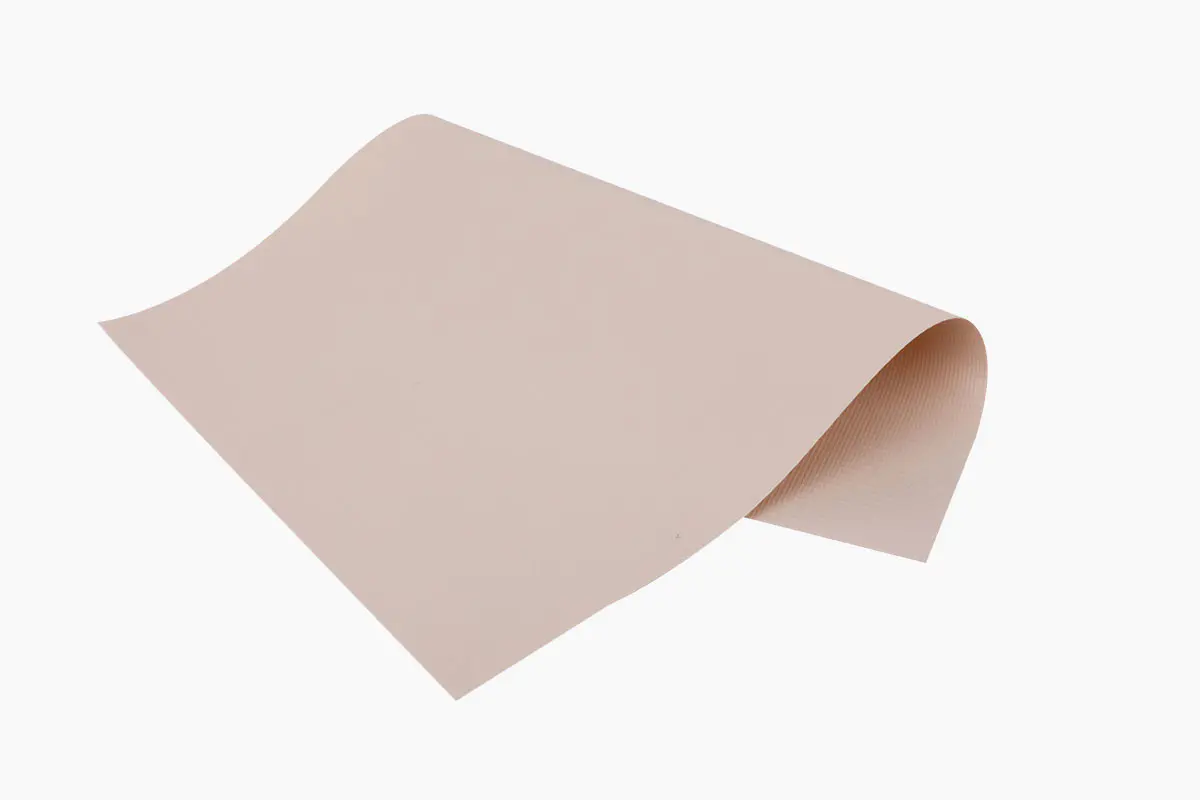 Heavy-Duty Reinforced Waterproof Tarpaulin TWP-0305-360360 gsm reinforced tarpaulin with grommets; listed tensile, tear and adhesion values help assess performance beyond weight alone.View Product →
| Property | Why it matters at large format | Typical industrial range |
|---|---|---|
| Total weight | Drives handling, wind resistance and abrasion life | 400 to 900 g/m2 |
| Tensile strength | Controls how far a panel can span unsupported | 1000 to 3000 N per 5 cm |
| Tear strength | Governs damage tolerance after a puncture | 150 to 600 N |
| Hydrostatic resistance | Prevents wicking on floor and cargo covers | 2000 to 10000 mm |
| Cold crack | Allows folding and installation in winter | Minus 20 to minus 35 degrees |
A common mistake is to over-specify weight and under-specify construction. A 900 g/m2 sheet on a coarse, low-count scrim may fail earlier than a 650 g/m2 sheet on a dense scrim with a properly stabilised coating, because the failure always begins at a stress concentration: a grommet, a seam end or a fold line.
Fabrication decides the real strength of any extra large tarp. Two panels of identical material can differ by a factor of two in service life depending on how the joints and edges were made.
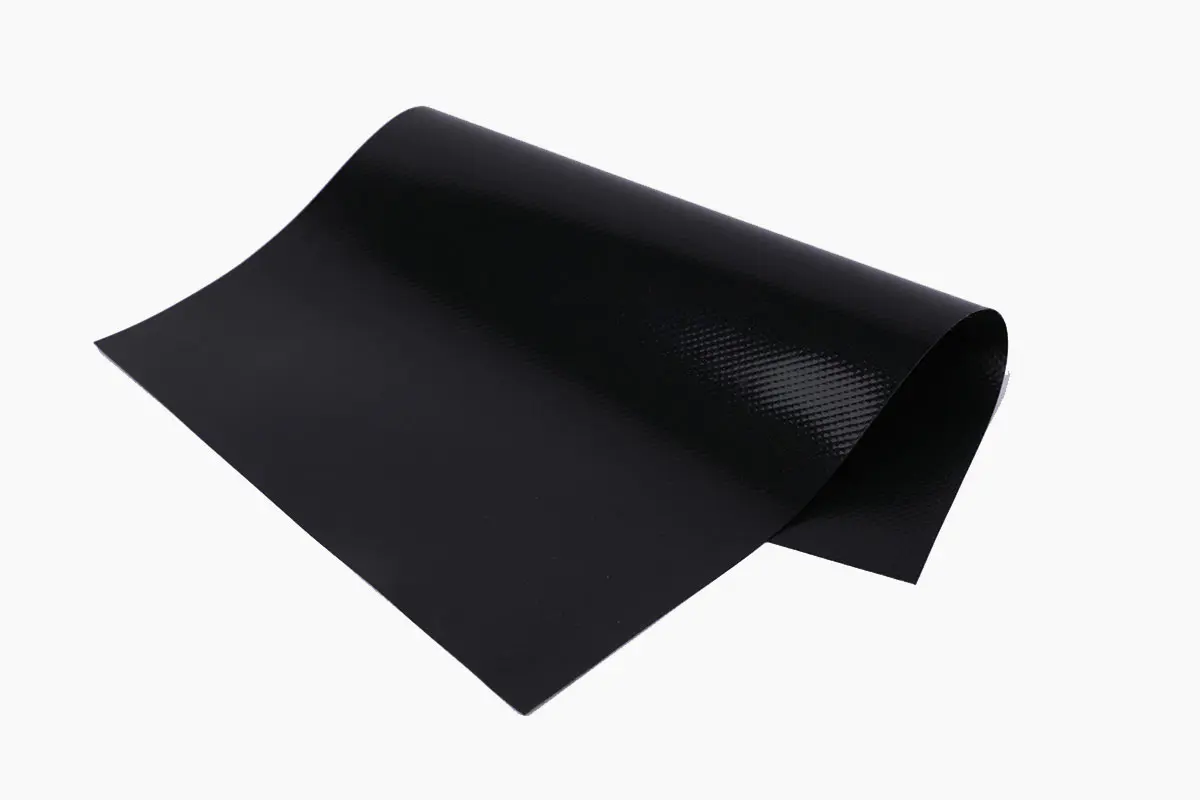 Multi-Purpose Insulated Cold-Weather Tarpaulin TWP0505-510510 gsm insulated tarpaulin with reinforced edges and grommets; check seam layout for cold-weather camping, hiking and construction use.View Product →
Ask for the overlap width, the seam direction relative to the main load axis, and the number of seams running along the short side. Seams should run parallel to the direction of least stress where geometry allows, and no seam should terminate at a corner without a reinforcing patch extending well past the joint.
Finished dimensions on large panels rarely come out exact. A workable contract specification allows plus or minus 1 percent on length and width, requires the diagonal difference to be measured and reported, and defines the grommet position tolerance separately, since eyelet placement affects installation far more than a few centimetres of edge length. Specify the hem width, the rope diameter if a rope core is used, and the spacing and diameter of eyelets. Where the cover will be tensioned, add a note that the panel must be cut with allowance for coating shrinkage and thermal movement, because a PVC-coated sheet expands measurably when warmed by direct sun.
Industrial use covers a wide range of conditions, and the dominant degradation mechanism differs by site. A specification that ignores the environment usually overpays in one property and underperforms in the one that matters.
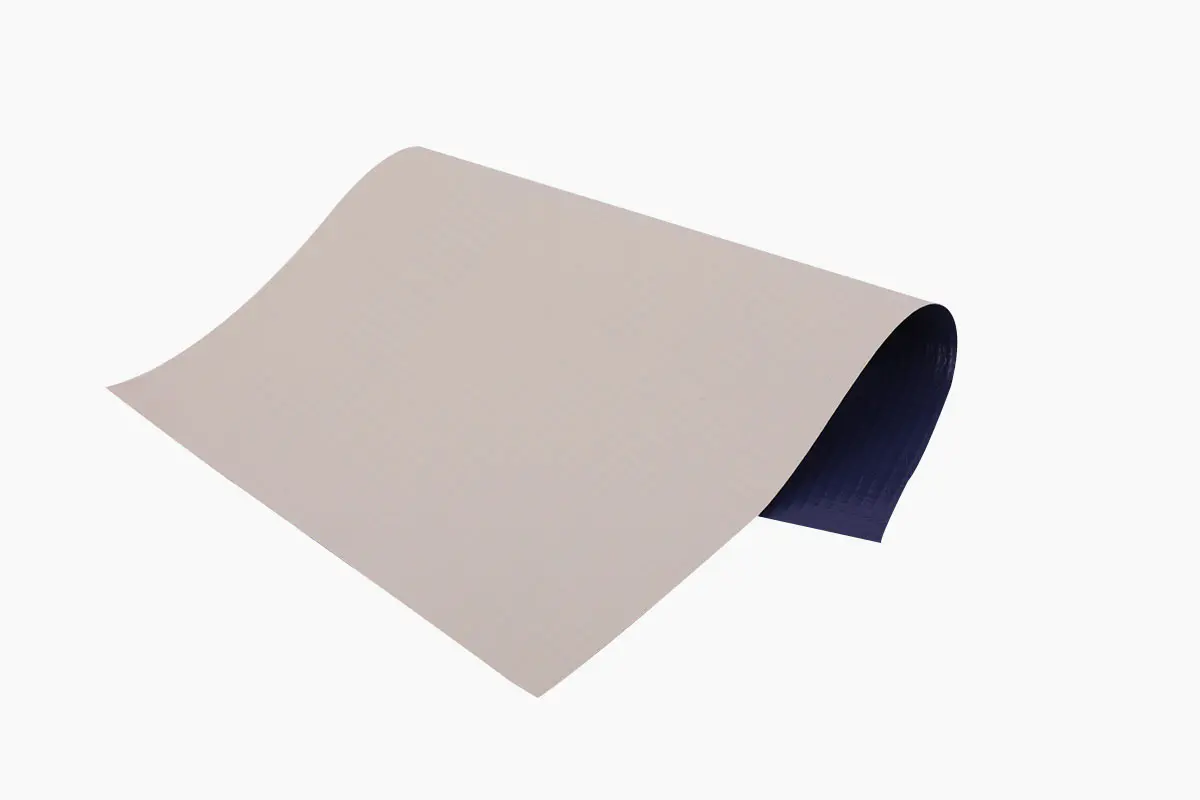 Premium Tear-Resistant All-Weather UV-Resistant Tarpaulin Fabric TWP-1010-480480 gsm PVC tarpaulin fabric with tear, tensile and UV-resistance claims; compare weathering evidence where sunlight exposure is the main risk.View Product →
| Environment | Dominant risk | Features to specify |
|---|---|---|
| High-altitude or desert sun | UV embrittlement, coating chalking | High UV stabiliser loading, light colours, stated weathering hours |
| Coastal or marine air | Salt corrosion of hardware, mildew | Anti-mould treatment, corrosion-resistant eyelets, welded seams |
| Humid tropical sites | Mould growth, trapped moisture | Antibacterial and antifungal additives, drainage design in the span |
| Cold storage and winter sites | Cracking when folded | Cold crack rating below the lowest site temperature |
| Fuel, oil or chemical zones | Coating swelling, staining | Chemical-resistant coating grade, sample immersion test |
| Dust or solvent handling | Static discharge | Antistatic formulation with a stated surface resistance |
Two of these deserve emphasis. UV protection is not a coating colour but a formulation decision, and it should be evidenced by accelerated weathering data rather than by a label. Antistatic performance is similarly verifiable: either the supplier provides a surface resistance figure measured to a recognised method, or the claim cannot be relied on for a hazardous area. Where a cover doubles as a light screen, an opaque black sheet is often preferred over a translucent one, because it prevents both glare and heat build-up underneath.
For a cover above 100 m2, labour usually costs more than the material over the life of the asset. Design decisions that reduce installation time and damage pay back far faster than a marginal saving on fabric weight.
Lifespan varies widely with exposure and care, and buyers should demand a realistic expectation rather than a warranty headline. A useful reference point is the documented relationship between UV exposure hours, coating weight and mechanical decline, which is covered in more detail in this discussion of how long industrial tarpaulin lasts and how to extend it.
Large fabricated panels are difficult to inspect after arrival and almost impossible to return economically. Verification therefore belongs at the factory, before loading.
Buyers new to the category often find it helpful to review the selection logic in this guide on choosing a heavy duty tarpaulin for industrial protection, which complements the inspection list above with application-based criteria.
| Failure mode | Root cause | Prevention |
|---|---|---|
| Grommet tear-out | Load concentrated on a single eyelet | Closer spacing, reinforcement patches, rope-core hem |
| Seam separation | Under-heated weld or contaminated surface | Parameter records, peel test on witness sample |
| Water ponding | Insufficient slope or tension | Specify a fall of at least 1 in 20 across the span |
| Coating chalking | Insufficient UV stabiliser | Request weathering hours and colour retention data |
| Mould staining | Moisture trapped between folded layers | Antifungal additive, dry storage, ventilation gaps |
| Cold cracking | Fabric folded below its cold crack limit | Match cold crack rating to site minimum temperature |
Note that four of these six failures are fabrication or handling issues rather than material issues. That distribution is typical, and it explains why experienced buyers spend as much time on seam drawings as on polymer data.
The sequence below reduces rework and prevents the most expensive error in this category, which is approving a material before the fabrication details are settled.
Figure 2: Approve material and fabrication together, then release bulk only after dimensional records are reviewed.
There is no single threshold, but most suppliers treat panels wider than the base fabric roll width, typically above 3.2 m, and larger than roughly 100 m2 as extra large. At that point the cover requires welded joints, reinforced hems and mechanical handling.
Usually not. A 10 m by 20 m cover in 610 g/m2 fabric weighs about 122 kg before reinforcements, which is beyond a safe manual lift. Plan for four people with a lifting aid, and design the packing so the panel can be unfolded without dragging.
Panels above 100 m2 commonly use eyelets at 500 mm centres, with doubled density at the corners and along any edge that will be under tension. Always confirm the spacing in the fabrication drawing, because eyelet position affects installation more than a small change in panel size.
Ask for accelerated weathering data showing hours of exposure against a defined retention of tensile strength, measured to a recognised method. A colour name or a marketing phrase is not evidence. For outdoor industrial use, request the figure in writing on the batch certificate.
Welded seams are the default for waterproof industrial panels because they close the joint completely and typically retain most of the parent fabric strength. Stitching remains useful for repairable non-critical hems, but needle holes must be sealed if the cover has to keep water out.
Clean it, dry it fully, and fold it loosely rather than tightly. Store it off the floor on a pallet, away from sharp edges and heat sources, and avoid stacking heavy items on top. Refold along different lines each time to prevent permanent creasing along the same seam.
 Industrial-Grade Reinforced UV-Resistant Clear Tarpaulin
Heavy-Duty Reinforced Waterproof Tarpaulin
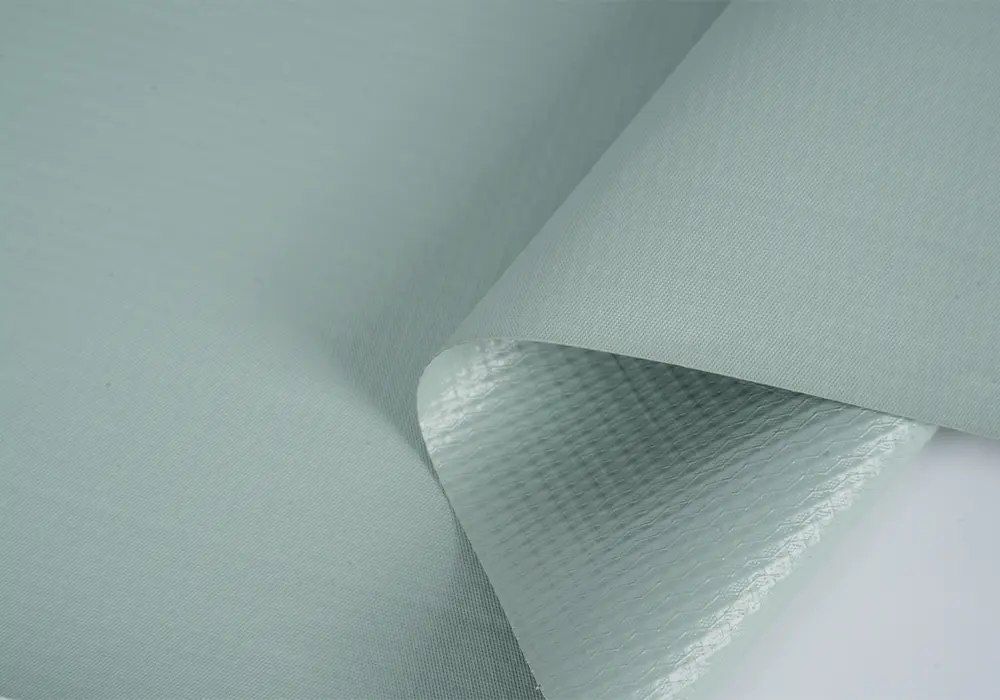 Liquid Barrier Anti Bedsore Tarpaulin For Medical Use
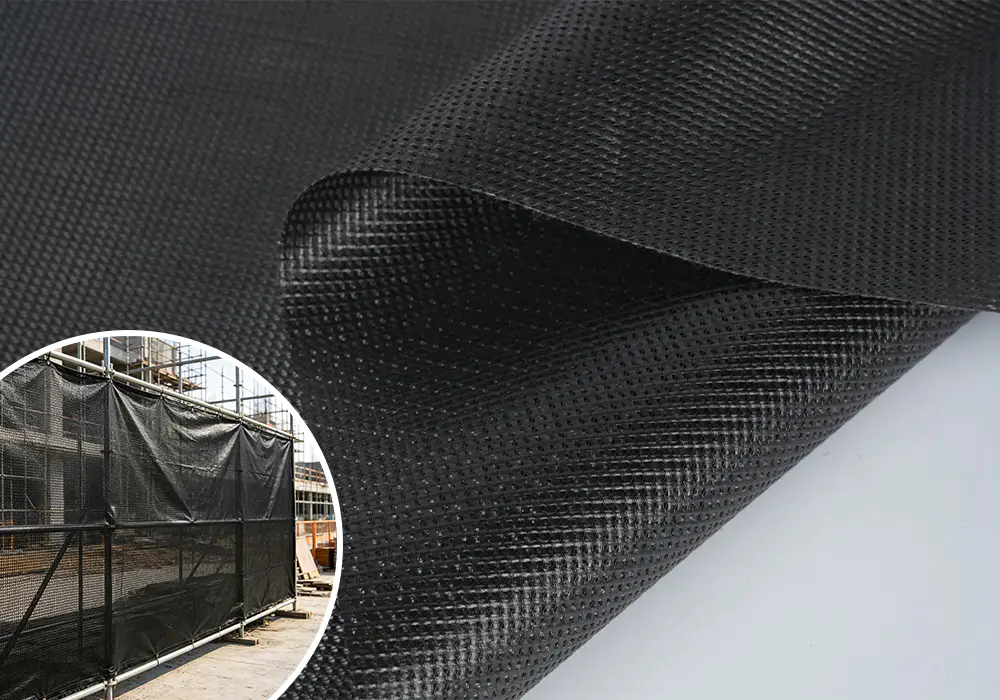 All Weather Heavy Duty Mesh Tarpaulin for Barrier Fencing
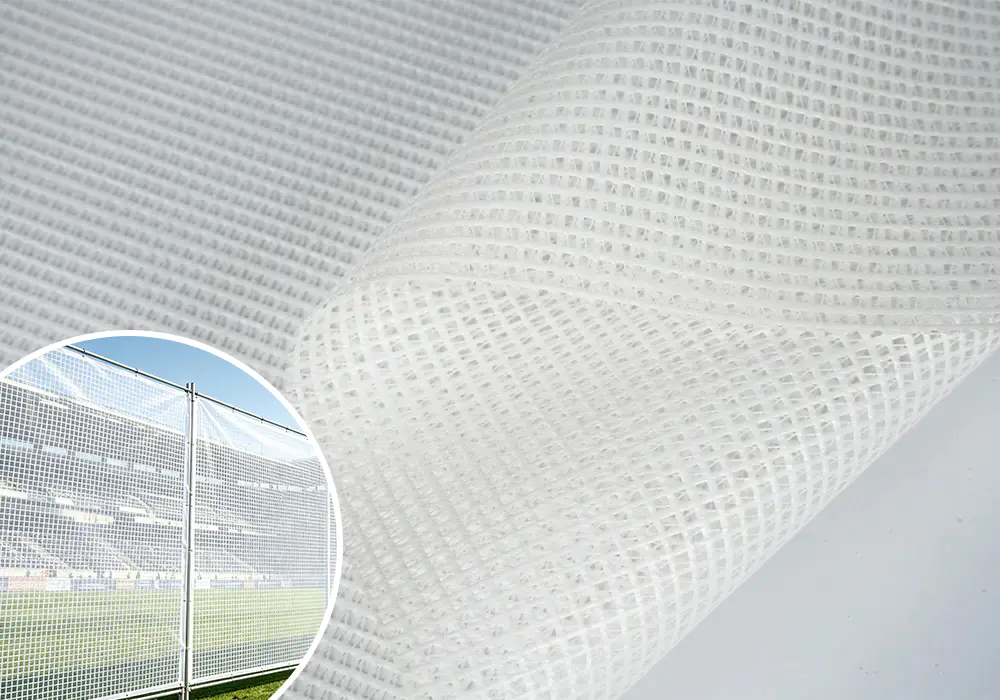 Lightweight Foldable Mesh Tarpaulin for Event Promotion
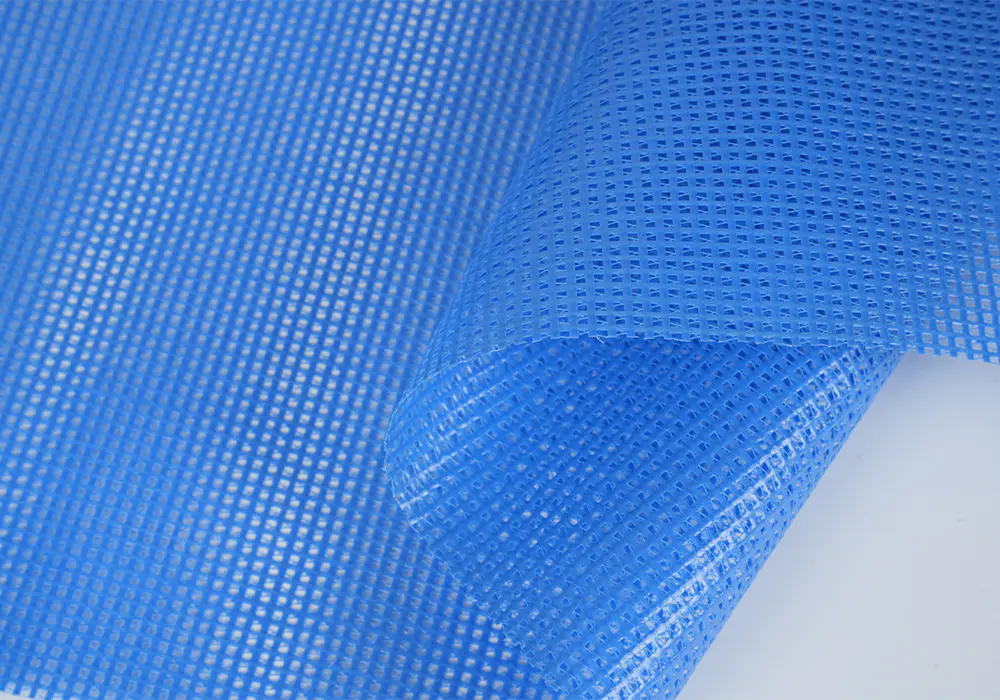 High Tensile Tear Proof Large Format Mesh Tarpaulin
 Custom Digital Printing Fabric Manufacturers
 Previous