

 English
  中文简体
中文简体  Español
News
Content
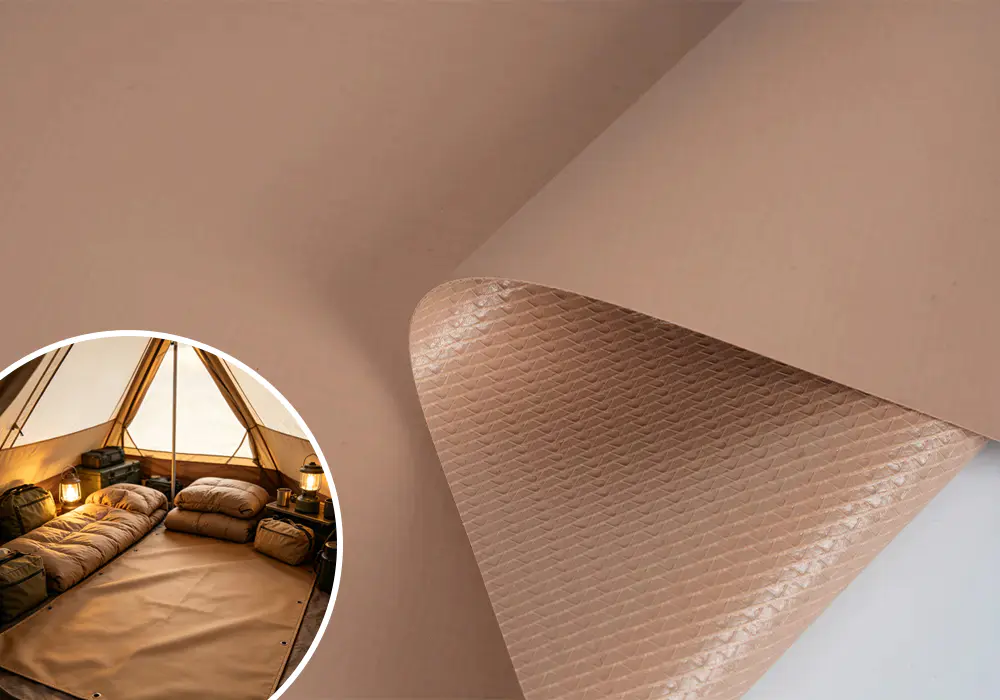
In the industrial field, protective materials are evolving rapidly, and industrial tarpaulin has become an indispensable covering solution across multiple application scenarios. Compared with conventional covering fabrics, tarpaulins stand out due to their ability to withstand long-term exposure to complex climates. The emergence of the weatherproof tarpaulin has enhanced the safety of outdoor operations and prolonged storage of goods. Weather resistance is no longer regarded as an optional advantage; it has become the core driving force in the expansion of the heavy duty tarpaulin market.
Weatherproofing as the Core Competitiveness
Industrial environments are highly complex, where coverings are not only required to shield against rain and wind but also to resist ultraviolet exposure, temperature fluctuations, and long-term humidity variations. Both UV resistant tarpaulin and tear resistant tarpaulin are increasingly emphasized in this context. Unlike lightweight short-term covers, industrial tarpaulin must guarantee stability even under long-term outdoor exposure.
This trend is reshaping market perception. End-users now prioritize “weathering durability” as a critical benchmark to evaluate reinforced tarpaulin performance, rather than focusing solely on strength or weight.
Integration of Weatherproofing and Applications
In multiple sectors, weather resistance directly determines whether tarpaulins can sustain their protective role over time:
Construction site tarpaulin: must withstand high temperatures, heavy rainfall, and dusty conditions without deformation or aging.
Truck cover tarpaulin: required to endure constant sunlight and strong wind pressure during long-haul transportation.
Warehouse tarpaulin: essential for long-term coverage of goods under high humidity conditions.
Agricultural tarpaulin: must provide dual protection against ultraviolet radiation and precipitation to secure agricultural resources.
These applications have broadened the demand for weatherproof tarpaulin and directed innovation in material selection and structural design.
Product Performance Comparison
To illustrate the weatherproofing performance of different types of industrial tarpaulin, the following table compares their characteristics:
| Tarpaulin Type | Weatherproof Performance | Key Advantages | Typical Applications |
|---|---|---|---|
| PVC tarpaulin | Excellent, suitable for long-term outdoor use | High abrasion resistance, waterproofing, UV resistance | Transportation, construction |
| PE tarpaulin | Moderate, ideal for short- to mid-term use | Lightweight, cost-effective, easy to handle | Agriculture, short-term warehousing |
| Laminated tarpaulin | Strong, double-layer or multi-layer protection | Structural stability, resistant to humidity variations | Machinery protection, outdoor work |
| Coated tarpaulin | High, enhanced by surface coatings | Waterproof, chemical resistant, UV resistant | Chemical storage, long-term coverage |
| Multi-layer tarpaulin | Very high, designed for conditions | Enhanced strength and durability, longer service life | Seaport operations, outdoor long-term coverage |
Innovation in Technology
As applications diversify, weatherproofing improvements are no longer achieved solely by increasing thickness or weight but by incorporating advanced composite materials and surface treatment technologies. Examples include:
Chemical resistant tarpaulin: reinforced with specialized coatings to enhance stability in chemical environments.
Fire retardant tarpaulin: integrates fire safety into weatherproofing performance.
Reinforced tarpaulin: utilizes mesh reinforcement or multi-layer lamination to maximize tear resistance.
These innovations allow industrial tarpaulin not only to perform reliably under general climate conditions but also to withstand environmental challenges.
Weatherproofing and Sustainability
Under growing global attention to sustainability, weatherproof tarpaulin is increasingly aligned with eco-friendly concepts. The adoption of recyclable materials and the extension of service life are redefining the industry’s development logic. Compared with disposable covers, high strength tarpaulin with longer durability significantly reduces waste and minimizes replacement frequency, creating both environmental and economic benefits.
Future Market Outlook
As demand grows in outdoor construction, logistics transportation, and agricultural protection, weatherproofing will continue to drive the expansion of the industrial tarpaulin market. The main directions of development include:
Integration of multiple functions: combining weatherproofing with fire resistance, chemical resistance, and tear resistance.
Material advancement: wider adoption of multi-layer tarpaulin and high-performance composite polymers.
Sustainability focus: development of recyclable, low-emission heavy duty tarpaulin solutions.
Standardization: weathering durability becoming a universal benchmark in procurement and application.
Weather resistance has become the strategic core of the industrial tarpaulin industry. From construction sites to transportation logistics, and from warehousing to agriculture, the durability of heavy duty tarpaulin represents more than physical protection—it symbolizes the balance between cost efficiency and sustainability in industrial applications.
 Previous