

 English
  中文简体
中文简体  Español
Bottom line For outdoor advertising, choose pvc flex banner sheet with 500D–1000D mesh, 440–610 gsm weight, and matte or semi-gloss finish. Always request UV test data (1000+ hours QUV) and thickness tolerance below ±5% from your supplier.
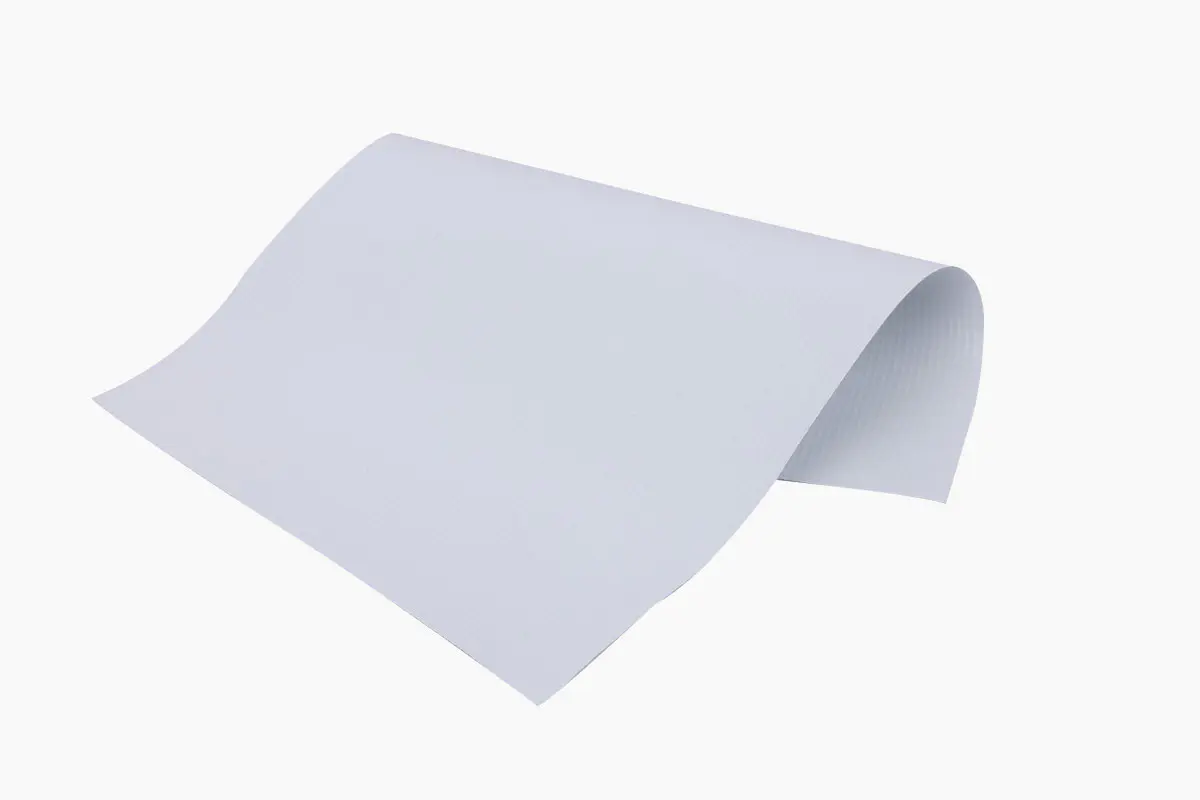
Over 78% of large-format outdoor ads in North America and Europe rely on pvc flex banner sheet because of its proven lifespan of 3–5 years in temperate climates and 2–3 years in high-UV regions. Reinforced PVC banners withstand wind loads up to 120 km/h when properly installed with 300–500 mm eyelet spacing. The combination of a printable top coat and a high-tenacity polyester scrim (300D to 1000D) gives a tear strength of 280–450 N in both warp and weft directions, according to ASTM D751.
For printing companies, the key performance indicators are ink adhesion (cross-hatch test ≥4B), dimensional stability (≤0.5% shrinkage after 48h at 70°C), and colour gamut. Premium PVC flex banner material from leading manufacturers delivers ΔE ≤1.5 for solvent and UV inks, ensuring brand colours remain consistent across production runs.
Inside the layers: mesh, coating, and weight matter
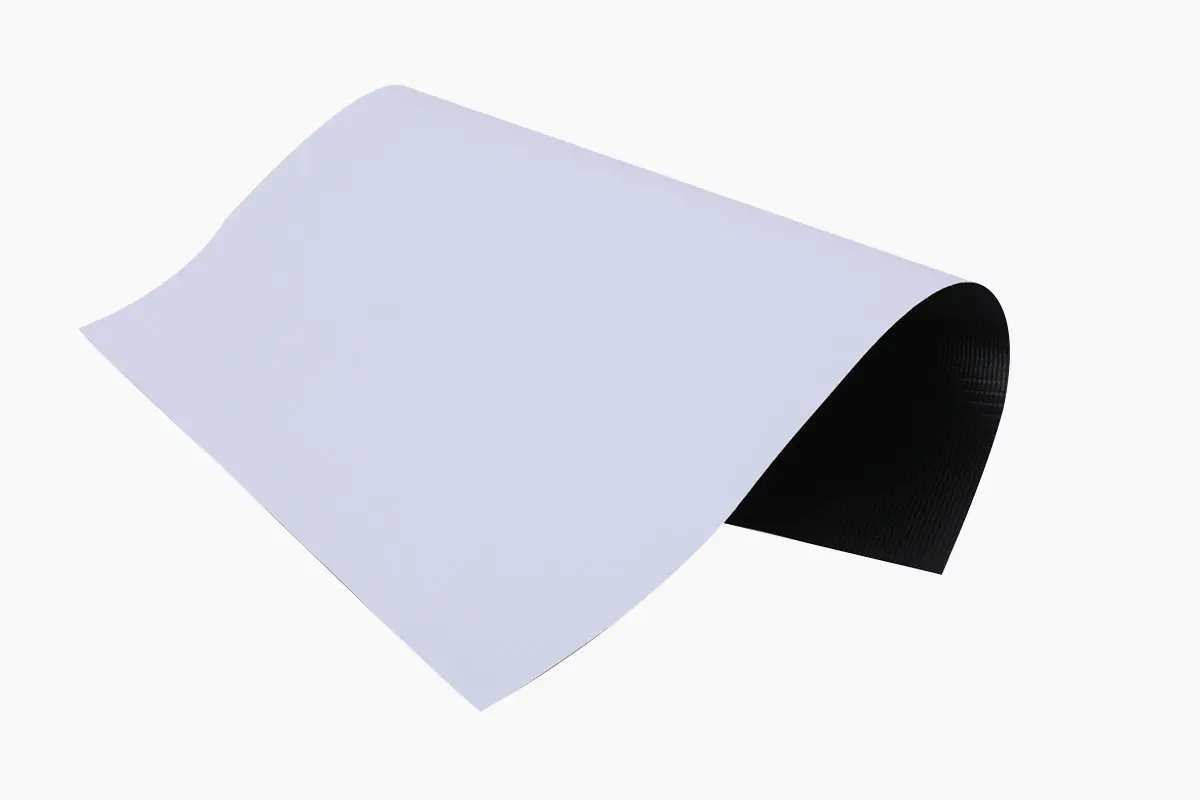
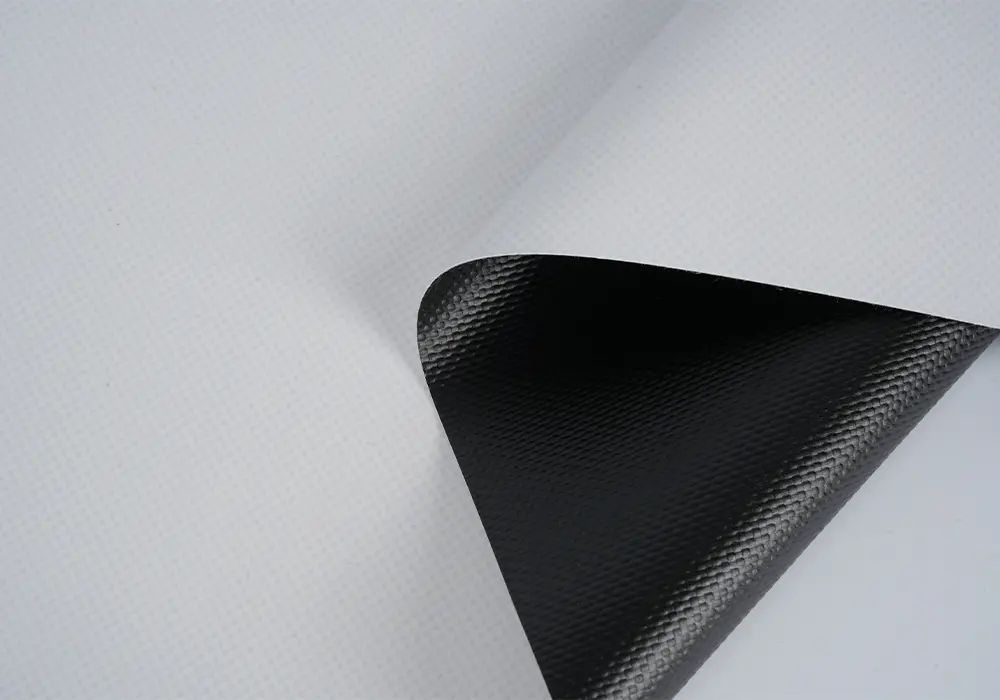
Standard PVC flex banner consists of three functional layers:
- Top printable layer – 80–120 micron PVC film with micro-porous coating for eco-solvent, latex, or UV inks. Glossy finish increases colour saturation by 15–20% but may cause glare; matte reduces reflectance to <5%.
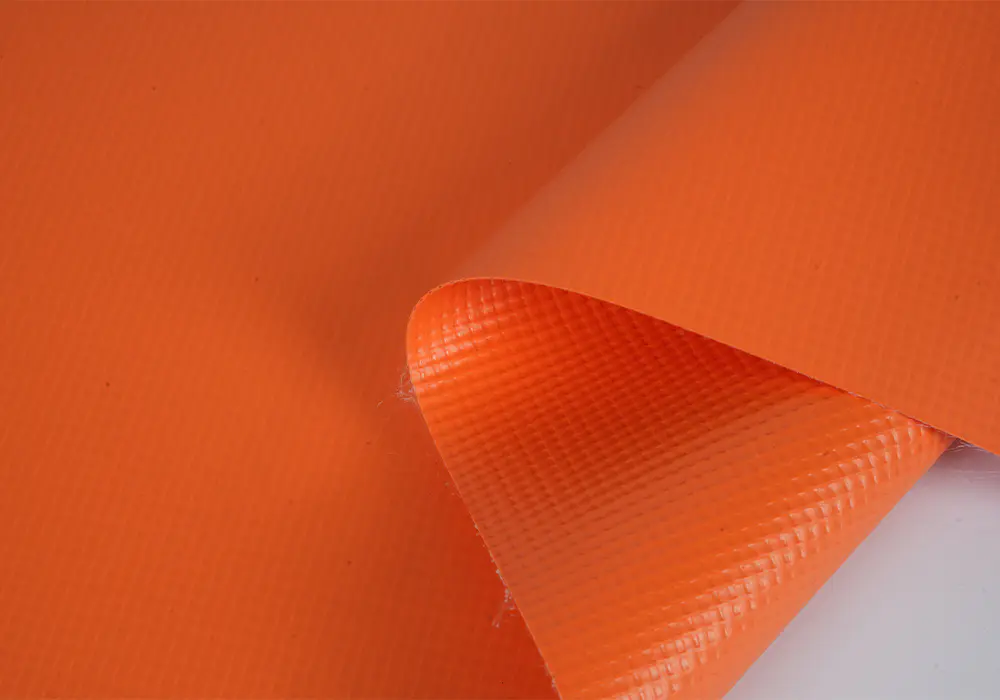
- Reinforcement scrim – 500D or 1000D high-tenacity polyester mesh. 500D is sufficient for most roadside banners (6×3 m), while 1000D is recommended for building wraps and areas with high wind exposure.
- Backing PVC layer – provides waterproofing (water absorption <0.2% by weight) and resistance to mildew. Flame-retardant grades (B1 or V2) are available for indoor or public events.
Weight & thickness – how to choose
| Application | Weight (gsm) | Thickness (µm) | Mesh density | Typical lifespan |
|---|---|---|---|---|
| Short-term promo (indoor/outdoor <6 months) | 280–340 | 280–320 | 300D | 6–12 months |
| General outdoor banners (1–2 years) | 440–510 | 380–450 | 500D | 2–3 years |
| Heavy-duty building wrap / long-term | 550–610 | 480–550 | 1000D | 4–5 years |
| Backlit / lightbox displays | 280–340 | 240–280 | 300D (translucent) | 2–3 years |
For frontlit applications, 440–510 gsm with 500D mesh is the industry sweet spot. It offers 35–40% higher tear resistance than 300D while remaining cost-efficient (approx. $0.8–$1.2/m² wholesale in 2026).
Printing performance: solvent, UV, or latex?
PVC flex banner sheet is compatible with all major digital printing technologies. However, ink adhesion and colour gamut vary significantly:
- Eco-solvent / solvent inks – the most used (approx. 65% of banner prints). Requires a micro-porous top coat. Typical curing time 12–24 hours. Data: colour gamut covers 92% of PANTONE solid coated with 8-colour printers.
- UV-curable inks – immediate curing, excellent scratch resistance. Best for high-volume production. However, UV inks on glossy PVC may exhibit slight surface tension issues; use a primer or choose UV-optimised banner material.
- Latex inks – water-based, odourless, and flexible. Works well with matte and semi-gloss PVC surfaces. Latex-printed banners have shown 20% better fold resistance compared to solvent inks in accelerated ageing tests.
For most outdoor advertising, solvent-printable PVC flex remains the most reliable and cost-effective. But if you are printing for indoor events or retail, latex or UV offer faster turnaround and lower VOCs.
Gloss vs. matte – which finish wins
| Finish | Gloss level (60°) | Best use | Durability (scratch) | Colour pop |
|---|---|---|---|---|
| Gloss | 75–85 GU | Billboards, retail signage (high impact) | Moderate | High |
| Matte | 10–25 GU | Exhibition backdrops, photography, light-controlled areas | High | Medium |
| Semi-gloss | 40–60 GU | Versatile, indoor/outdoor hybrid | Good | High |
In a 2024 survey of 150 sign shops, 58% preferred matte for long-term outdoor banners because it reduces UV reflection and hides minor scratches, while 34% chose gloss for maximum colour brilliance on short-run campaigns.
Weather resistance: UV, rain, and thermal cycling
High-quality PVC flex banner sheet passes 1000–1500 hours of QUV weathering (ASTM G154) with less than 10% colour shift and no surface cracking. To put that in perspective: 1000 hours QUV equals roughly 2 years of south-facing outdoor exposure in Central Europe. Waterproofing is inherent (PVC is hydrophobic), but the seam strength and edge finishing also determine longevity. Welded seams using high-frequency welding maintain 90% of the original fabric strength, while stitched seams may degrade by 25% after 18 months.
For coastal or high-humidity areas, anti-mildew additives and a UV absorber package (HALS + benzotriazole) extend service life by up to 60%. Always check the manufacturer's UV test report — a reputable PVC flex banner material manufacturer will provide data for 500, 1000, and 1500 hours.
PVC flex vs. paper, fabric & alternatives
| Property | PVC flex banner | Paper banner | Polyester fabric | Mesh banner |
|---|---|---|---|---|
| Weather resistance | Excellent (5 yr) | Poor (weeks) | Good (2–3 yr) | Moderate (windy, porous) |
| Waterproof | Yes | No | Coating dependent | Partial |
| Tensile strength (N/50mm) | 600–1200 | 80–150 | 350–600 | 200–400 |
| Print resolution (dpi) | 1440+ | 720 | 1440+ | 720–1080 |
| Cost per m² (wholesale) | $0.8–$2.5 | $0.3–$0.8 | $1.8–$4.0 | $1.0–$2.0 |
| Reusability | Moderate | Low | High (washable) | Low |
While fabric banners are gaining traction for premium events, PVC flex remains unmatched for large-scale, cost-sensitive, and long-duration outdoor advertising. Mesh banners are a niche product for wind-permeable fences but cannot match the print quality of solid PVC.
Manufacturing precision: what to ask your supplier
Consistency is the hidden factor. A top-tier PVC flex banner material manufacturer maintains:
- Thickness tolerance ≤ ±5% across the roll width and length (e.g., 450 µm ± 22 µm).
- Weight variation ≤ ±3% (e.g., 510 gsm ± 15 gsm).
- Mesh alignment – scrim centred within 1.5 mm to prevent warping during printing.
- Coating uniformity – surface energy between 38–42 dynes/cm for optimal ink wetting.
Ask for a COA (Certificate of Analysis) with each batch. In 2025, the ISO 23590 standard for flex banner materials introduced a new classification system: Type A (premium outdoor, 1000+ hours UV), Type B (standard outdoor, 500–999 hours), and Type C (indoor/short-term). For most outdoor advertising, Type B or A is recommended. Type A typically costs 12–18% more but offers double the service life.
- Define exposure duration – < 6 months → 300D, 340 gsm; 1–3 years → 500D, 440–510 gsm; >3 years → 1000D, 550+ gsm.
- Check lighting – frontlit for daytime, backlit for lightbox (translucent, 280–340 gsm).
- Choose finish – gloss for vibrant retail, matte for glare-free exhibition, semi-gloss for all-round.
- Print technology – solvent or eco-solvent for 90% of jobs; UV for quick turnaround; latex for eco-friendly.
- Request test samples – print your own artwork, check adhesion with tape test (ASTM D3359), and fold the material 10 times to see if cracking occurs.
- Supplier credentials – ask for UV ageing reports, tensile data, and thickness consistency. A reliable PVC banner fabric supplier will provide these without hesitation.
The industry is shifting toward bio-based plasticisers (up to 30% renewable content) and recyclable PVC monomaterial structures. Several manufacturers now offer PVC flex banners with a recyclability rate of 85% through mechanical recycling (VinylPlus certified). In addition, digital printing speeds have increased: new single-pass UV printers can produce 600 m²/hour on PVC flex, making it the fastest large-format substrate.
Lightweight high-strength variants (e.g., 440 gsm with 1000D mesh) are emerging, reducing shipping costs by 18% and installation effort. By 2027, it is estimated that over 40% of PVC flex banners will incorporate at least 20% post-industrial recycled PVC, without compromising print quality or weather resistance.
Final takeaway: For outdoor advertising, PVC flex banner material with 500D mesh, 440–510 gsm, and a matte or semi-gloss finish delivers the best balance of durability, print quality, and cost. Always validate supplier quality with UV test data and thickness tolerances.
 Previous