

 English
  中文简体
中文简体  Español
News
Content
- 1 Material Composition and Its Impact on Lifespan
- 2 Weathering Resistance: Sun, Rain, and Wind
- 3 Chemical and Abrasion Resistance
- 4 Temperature Extremes and Flexibility
- 5 Real-World Service Life: A Comparative Table
- 6 Maintenance and Repair Cycles
- 7 Cost-Per-Year Analysis (Qualitative)
- 8 Environmental Lifespan: Biodegradation and Disposal
- 9 When to Choose Each Material
- 10 Verdict: Which Lasts Longer?
When selecting a protective fabric for outdoor advertising, truck covering, or construction site screening, professionals often pit two materials against each other: the PVC cover banner and the PE tarpaulin. Both are ubiquitous in industrial and commercial settings, yet their lifespans differ dramatically under real-world conditions. Understanding these differences is not merely a matter of cost analysis—it directly impacts safety, replacement cycles, and total ownership expense.
Material Composition and Its Impact on Lifespan
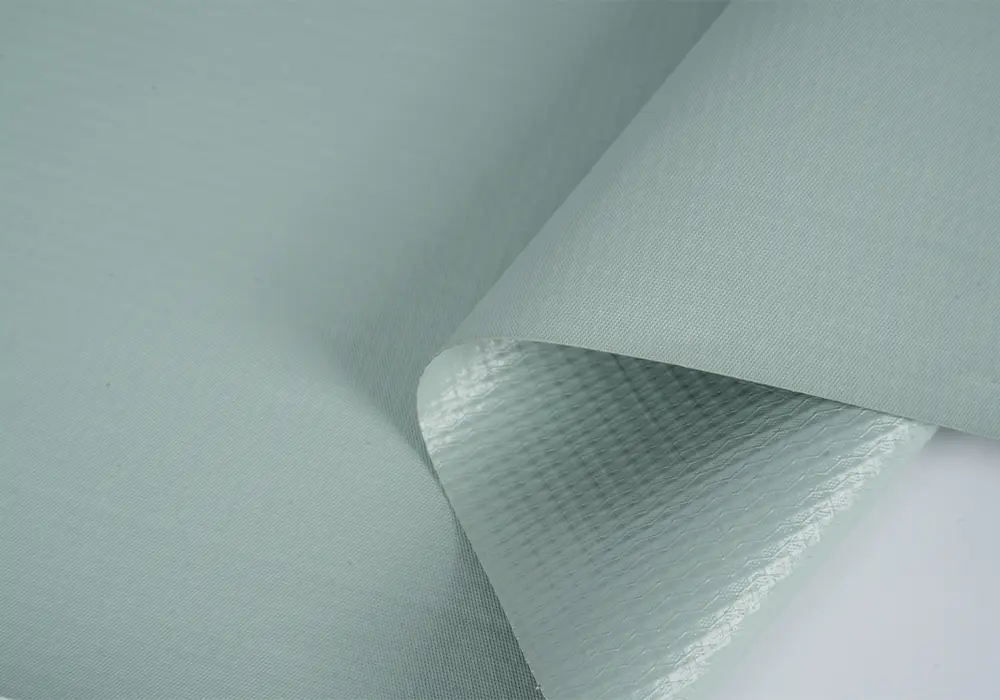
The fundamental difference between a PVC cover banner and a PE tarpaulin lies in their polymer base and plasticizer systems. PVC (polyvinyl chloride) is inherently dense, with a high chlorine content that resists oxidation. Manufacturers reinforce it with polyester scrim—a mesh of high-tensile fibers—then coat both sides with liquid PVC, creating a monolithic sheet. This construction means that even if the surface scratches, the underlying matrix remains waterproof and UV-resistant.
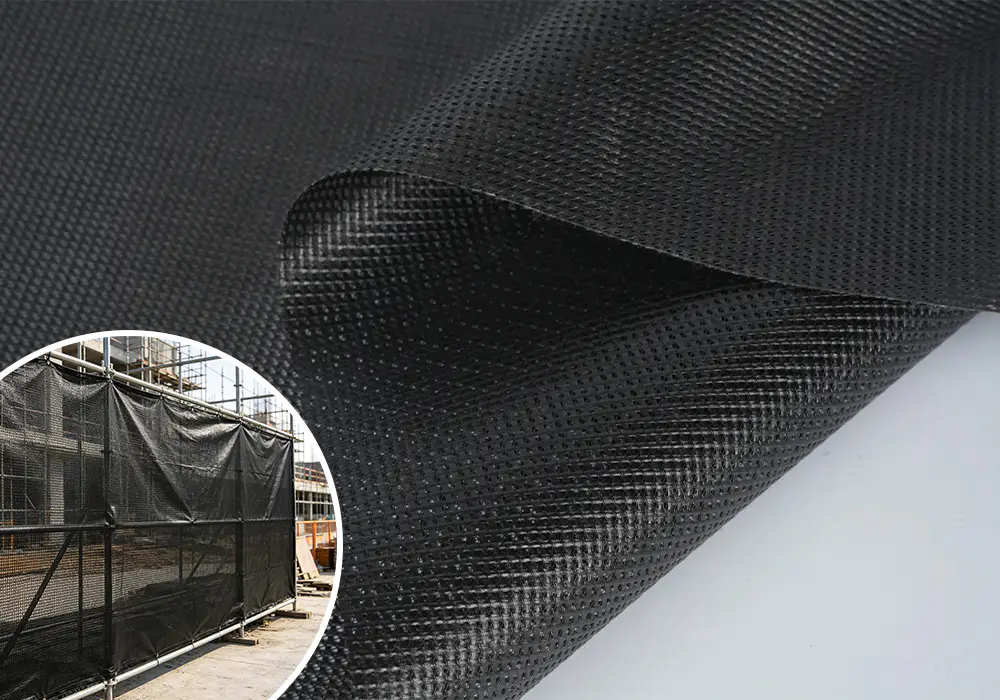
PE tarpaulins, by contrast, start with woven high-density polyethylene (HDPE) tapes. These tapes are extruded, stretched, and woven into a mesh, then laminated on one or both sides with low-density polyethylene (LDPE) film. The lamination is mechanical, not chemical—it peels over time. A standard PE tarpaulin has no intrinsic UV stabilizer in the weave; instead, manufacturers add carbon black or UV masterbatch to the coating layer. Once that micron-thin film erodes, the exposed HDPE tapes become brittle.
| Property | PVC Cover Banner | PE Tarpaulin |
|---|---|---|
| Base polymer | Polyvinyl chloride (homogenous) | HDPE woven tapes + LDPE laminate |
| Reinforcement | Internal polyester scrim | Woven structure (self-reinforcing) |
| Bonding type | Chemical (fusion) | Mechanical (lamination) |
| UV protection | Integrated throughout thickness | Limited to surface coating |
| Plasticizer system | Phthalate or non-phthalate permanent | None (PE is naturally semi-flexible) |
Weathering Resistance: Sun, Rain, and Wind
Outdoor longevity hinges on three stressors: ultraviolet radiation, moisture cycling, and mechanical fatigue from wind. A cover banner made of PVC typically withstands these for 3–5 years in continuous outdoor use, whereas a standard PE tarpaulin begins to fail at 12–18 months. This two- to threefold difference stems from how each material dissipates energy from UV photons.
UV Degradation Mechanisms
PVC degrades via dehydrochlorination—UV light strips hydrogen chloride from the polymer chain, leaving conjugated double bonds that cause yellowing. However, high-quality PVC cover banners contain organotin or calcium-zinc stabilizers that scavenge free radicals before chain scission occurs. Because the PVC layer is 0.4–0.6 mm thick and uniformly loaded with stabilizers, the material loses less than 15% of its tensile strength after 2,000 hours of accelerated UV testing (equivalent to two years of Florida sunlight).
PE undergoes Norrish type II photo-oxidation. UV light breaks carbon-hydrogen bonds, creating hydroperoxides that trigger chain cleavage. The woven HDPE tapes in a PE tarpaulin are only 0.08–0.12 mm thick. Once the thin LDPE coating—which contains of the UV absorber—cracks, the tapes become friable within 200–300 hours of direct exposure. Finger-pressure tests on aged PE tarpaulins often cause the weave to crumble like dry leaves.
Water and Humidity Effects
Neither material absorbs significant moisture. PVC has water absorption below 0.2% by weight; PE is even lower at 0.01%. However, failure modes differ. A PVC cover banner maintains its seam integrity because heat-welded seams (radio-frequency or hot-air) fuse the material into a single layer. PE tarpaulins rely on sewn hems with polypropylene rope inserted into the hem. Sewing needles create perforations that wick water into the weave, promoting microbial growth and rot at the stitch holes. In humid tropical environments, PE tarpaulin hems often fail within eight months, while a welded PVC banner remains intact for three years.
Wind Fatigue and Tear Propagation
Here, the woven structure of PE tarpaulins offers a paradoxical advantage: they tear neatly along scrim lines, allowing field repairs with tape. But tear initiation occurs more easily due to lower initial tear strength (average 35–50 N for PE vs. 120–200 N for PVC cover banner). PVC’s polyester scrim arrests tearing; once a slit forms, the scrim fibers absorb the load and stop propagation. PE’s woven tapes, once cut, unravel continuously under wind flapping. Grommets—the metal eyelets used for lashing—rip out of PE tarpaulins at approximately 80–100 kg pull, whereas PVC cover banners retain grommets up to 250 kg pull due to the fabric’s higher modulus and reinforcement.
Chemical and Abrasion Resistance
Industrial environments expose covers to diesel exhaust, acid rain, bird droppings, and road salts. A cover banner made from PVC resists dilute acids and alkalis (pH 4–9) with minimal surface etching. Oil and grease cause temporary swelling but no permanent embrittlement. PE tarpaulins are chemically inert to solvents and acids, but they swell and distort in contact with gasoline or lubricating oils—common in trucking and construction. Swollen HDPE tapes lose orientation and become weak.
Abrasion resistance is unequivocally in PVC cover banners. The smooth, plasticized surface has a coefficient of friction of 0.4–0.6, allowing debris to slide off. PE’s textured, woven surface traps grit, which then abrades the LDPE coating during folding or wind-driven movement. After 500 cycles on a Martindale abrasion tester, a 0.5 mm PVC cover banner shows less than 2% mass loss; a typical PE tarpaulin loses 12–18% of its coating, exposing bare weave.
Temperature Extremes and Flexibility
Cold performance distinguishes the two materials dramatically. At -20°C, plasticized PVC retains flexibility—it can be folded without cracking. Many PVC cover banners remain usable down to -30°C. PE tarpaulins below -10°C become as stiff as cardboard; bending causes stress whitening and micro-cracks in the LDPE layer. These cracks expand during thaw cycles, eventually causing pinholing.
High-temperature performance also matters. On a summer day under direct sun, a dark-colored cover banner can reach 70°C surface temperature. PVC cover banners are formulated with heat stabilizers to withstand 80°C continuous operation. PE tarpaulins soften at 55–60°C—the LDPE coating begins to flow, exposing the weave. This thermal softening also causes grommets to pull through the material if tensioned while hot.
Real-World Service Life: A Comparative Table
The following table summarizes expected lifespans based on typical industrial use cases (continuous outdoor exposure, temperate climate, with proper installation—no sharp edges or pooling water).
| Application Scenario | PVC Cover Banner | PE Tarpaulin |
|---|---|---|
| Roofing underlay (temporary) | 5–7 years | 1–2 years |
| Truck side curtain | 4–6 years | 1.5 years (frequent flap) |
| Construction site dust screen | 3–4 years | 8–12 months |
| Agricultural silage cover | 2–3 years (though not recommended) | 6–8 months (PE preferred for breathability) |
| Outdoor event tent wall | 4–5 years | 1 year (UV deterioration) |
| Marine/coastal (salt spray) | 3 years (if stainless grommets) | 6 months (grommet corrosion + UV) |
Note: PE tarpaulins excel only in short-term (less than 6 months) or indoor applications where cost is the overriding factor. For longevity, the PVC cover banner consistently outperforms.
Maintenance and Repair Cycles
Longevity is not just about initial failure—it is about how many times a product can be repaired before replacement. A PVC cover banner accepts heat-welded patches and solvent-based adhesives (e.g., THF-based PVC glue). A skilled technician can repair a torn PVC banner to 90% of original strength. PE tarpaulins, by contrast, cannot be welded; repairs require adhesive tapes that lose stickiness after 3–6 months in UV. Sewing a patch creates new perforations and accelerates failure.
Furthermore, a PVC cover banner can be re-coated with liquid white PVC or acrylic topcoats to extend life by another 12–24 months. Field recoating is not possible with PE tarpaulins because the LDPE surface has low surface energy (32 dynes/cm), repelling paints and coatings.
Cost-Per-Year Analysis (Qualitative)
While initial purchase prices vary by region and volume, a general rule holds: a PVC cover banner costs 2.5 to 4 times more than a comparable PE tarpaulin. However, if a PE tarpaulin lasts one year and a PVC banner lasts four years, the annualized cost is similar or lower for PVC. Warehousing, labor for replacement, and downtime costs further tilt the balance. For fixed installations (e.g., stadium construction fences), replacing a PE tarpaulin three times in three years versus one PVC installation increases labor costs by 200% and generates three times the waste.
Environmental Lifespan: Biodegradation and Disposal
A frequently overlooked aspect is end-of-life longevity—how long the material persists in landfills or the environment. Neither product is biodegradable. However, a PVC cover banner can be mechanically recycled into low-grade sheet goods or flooring underlays if uncontaminated. PE tarpaulins are recyclable in principle, but the lamination and filler pigments (calcium carbonate) reduce the recycled polymer’s quality. In practice, PE tarpaulins become single-use waste after their short service life, contributing to microplastic shedding as the HDPE tapes fragment. PVC does not readily fragment; it remains intact for decades, which some consider a pollution disadvantage but others note as evidence of its physical longevity.
When to Choose Each Material
Choose a PVC cover banner when:
Required service life exceeds 18 months
UV exposure is daily and direct
Seam strength is critical (load-bearing covers)
Wind flapping is unavoidable
Acid rain or industrial pollutants are present
Grommet retention is essential for tensioned systems
Choose a PE tarpaulin when:
Coverage period is less than 12 months
Budget is the absolute constraint (short-term projects)
Weight is critical (PE is 30–50% lighter than PVC)
Breathability is needed (e.g., covering damp lumber)
Disposal after a single use is already planned
Storage space is extremely limited (PE packs smaller)
Verdict: Which Lasts Longer?
Under identical outdoor conditions, a professionally fabricated PVC cover banner lasts 3 to 5 times longer than a standard PE tarpaulin. The gap widens in high-UV regions (Arizona, Southern Europe, Australia) and narrows slightly in cool, overcast climates, but never reverses. The fundamental reasons are material homogeneity (PVC is solid throughout; PE is a laminate of dissimilar layers) and UV stabilization (integrated in PVC, surface-only in PE). For any application where labor and downtime have real costs, the PVC cover banner is the longer-lasting, lower-hassle investment.
That said, the PE tarpaulin retains a legitimate role for ultra-short-term tasks: covering a weekend event, protecting furniture during a one-week renovation, or as a disposable drop cloth. But if the question is “Which one lasts longer?”—the answer is unambiguous. The PVC cover banner endures seasons that would turn a PE tarpaulin into brittle shreds. For industrial buyers, the data supports a simple rule: plan for three years or more, buy PVC; need only one season, PE will suffice. Longevity, in the end, is not an accident of chemistry—it is a design choice embodied in every molecular bond.

 Previous