

 English
  中文简体
中文简体  Español
Direct Answer: How to Choose a PVC Flex Banner
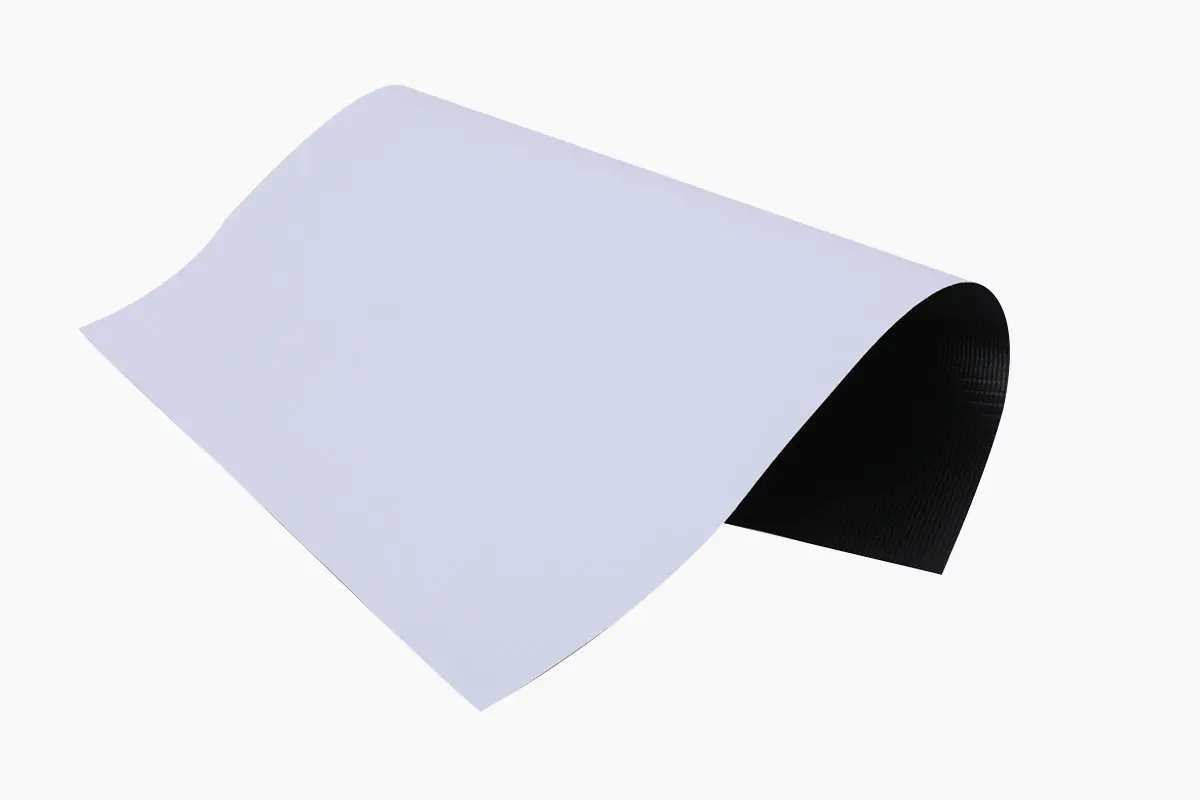
For most outdoor advertising and building wraps, the optimal choice is a knife-coated frontlit PVC flex with a weight between 440 GSM and 510 GSM, a high-denier polyester scrim (for example 1000D), and a matte finish. This specification delivers the best balance of tensile strength, ink adhesion, and wind resistance for large-format signage.
The material is a composite of approximately 65 percent PVC resin and 35 percent high-tenacity polyester scrim by weight. This construction ensures that the banner remains flexible in cold climates (down to -20 degrees Celsius) while maintaining dimensional stability in heat (up to +70 degrees Celsius).
Decoding Thickness and Weight: GSM, Denier, and Caliper
Thickness and weight are the two most critical technical parameters. They directly influence durability, handling, and print quality. Do not confuse GSM (grams per square metre) with caliper (microns or millimetres) – while related, they measure different physical properties.
Weight (GSM) – The Core Strength Indicator
GSM defines the areal density of the finished flex. Industry standards classify banners into three weight classes:
- Lightweight (280 – 350 GSM) – suitable for indoor displays, short-term event banners, and backlit applications where transparency is required.
- Mid-weight (380 – 440 GSM) – the workhorse for retail signage, trade shows, and semi-permanent outdoor use (up to 6 months).
- Heavy-duty (460 – 610 GSM) – engineered for construction hoardings, perimeter fencing, and long-term outdoor advertising (1 to 3 years). For most projects, 510 GSM frontlit flex offers the highest tear resistance without compromising print sharpness.
Denier – The Scrim Backbone
Denier measures the linear density of the polyester yarns woven into the scrim. A 1000D by 1000D weave (warp and weft) provides exceptional tensile strength (at least 2800 N per 5 cm in both directions). Lower denier (for example 500D) reduces cost but increases the risk of stretching and tearing under high wind loads.
For a practical comparison, consider the following typical values:
| Property | Lightweight | Mid-weight | Heavy-duty |
| GSM range | 280 – 350 | 380 – 440 | 460 – 610 |
| Scrim denier (typical) | 500D | 750D – 1000D | 1000D – 1250D |
| Tensile strength (N per 5 cm) | up to 2000 | 2200 – 2600 | at least 2800 |
Frontlit vs Backlit: The Finish Matters
The surface finish determines how the banner interacts with light, ink, and the environment. There are three primary categories:
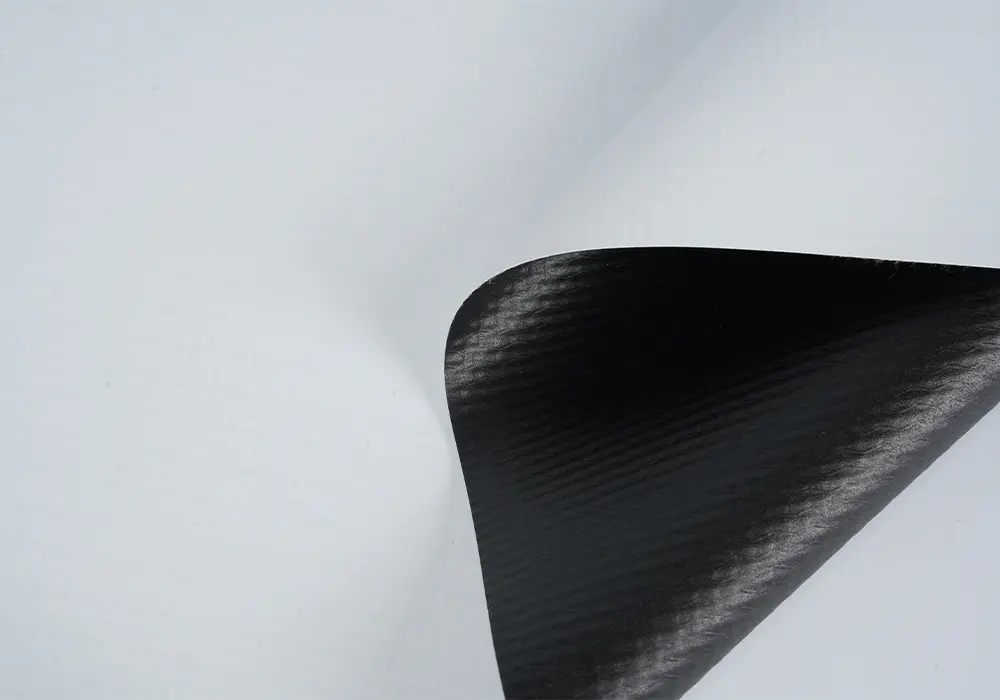
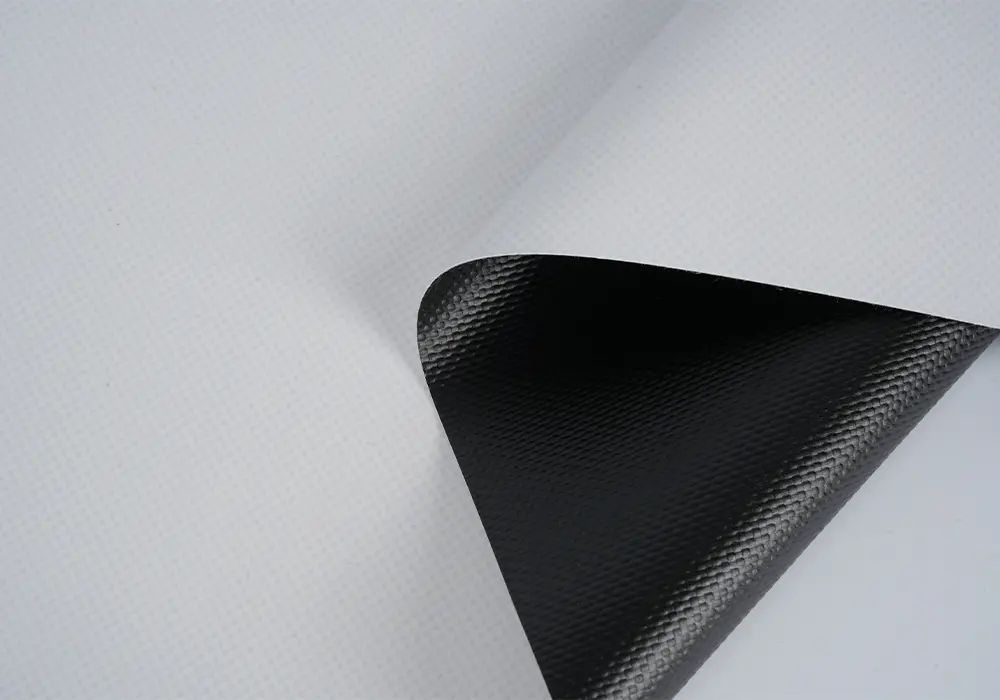
- Matte frontlit flex – the most versatile. The micro-porous surface absorbs solvent and UV inks rapidly, delivering high colour gamut and low reflectivity. It is the industry standard for outdoor billboards because it minimises glare from sunlight.
- Glossy frontlit flex – offers vibrant, saturated colours with a shiny appearance. However, it reflects ambient light, which can reduce legibility in bright conditions. Best used for indoor point-of-sale displays or short-term events.
- Backlit flex (translucent) – designed for lightbox applications. The material has controlled opacity (typically 15 to 25 percent light transmission) to allow even backlighting while maintaining colour fidelity. It is not recommended for standard outdoor use due to lower UV resistance.
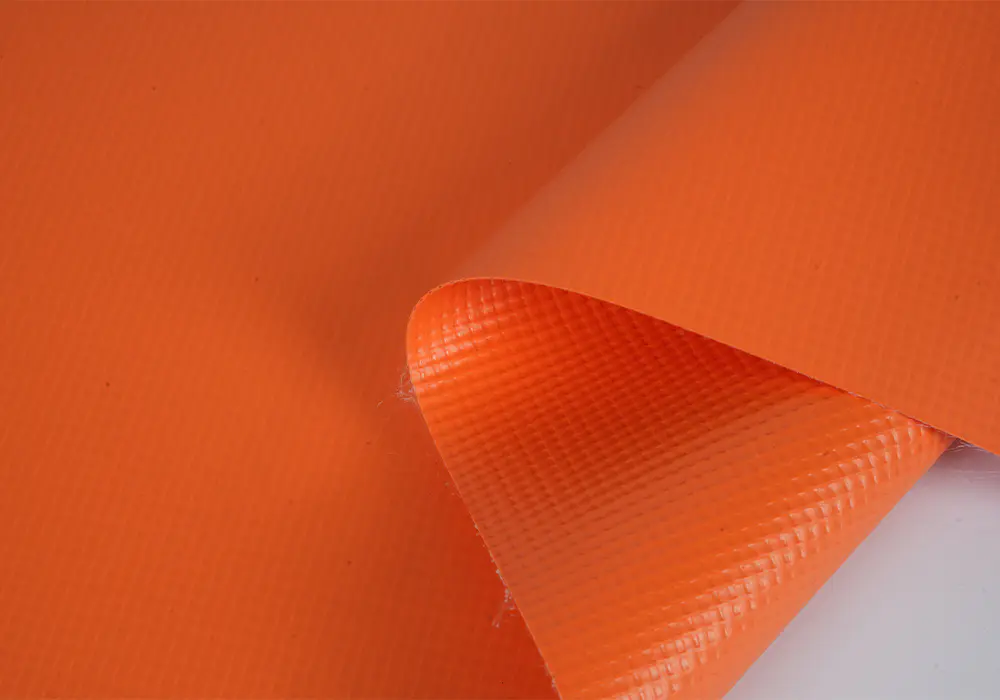
For outdoor advertising, matte frontlit with a micro-embossed surface provides the best ink anchorage and scratch resistance. The slight texture also helps hide minor surface imperfections caused by wind-blown debris.
PVC Coating Technology: Knife-Coated vs Calendered
The manufacturing process significantly affects the banner's mechanical properties and dimensional stability. Two main methods dominate the industry:
- Knife-coated (or spread-coating) – liquid PVC paste is applied onto the scrim via a doctoring blade. This method produces a banner with superior flatness, consistent caliper (plus or minus 5 percent), and excellent lamination strength. It is the preferred choice for high-end frontlit flex because it allows precise control over coating weight (for example 400 to 550 GSM).
- Calendered – solid PVC film is heat-pressed and laminated onto the scrim. While more economical, calendered banners often have internal stresses that can cause curling or tenting at the edges when exposed to temperature variations. The coating thickness also tends to be less uniform (plus or minus 10 percent).
For professional outdoor signage, always specify knife-coated frontlit flex. The additional cost is marginal compared to the long-term performance gains, especially for large-format installations where dimensional accuracy is critical.
Raw Material Composition and Additives
A high-quality PVC flex banner is not just PVC and polyester. It contains a blend of functional additives that determine its weather resistance, fire retardancy, and flexibility. The typical formulation includes:
- Plasticisers (for example DINP, DOTP) – up to 35 percent by weight. They maintain flexibility at low temperatures. A high-quality banner retains flexibility down to -20 degrees Celsius without cracking.
- Stabilisers (calcium-zinc or organotin) – prevent thermal degradation during processing and provide UV screening. Barium-zinc stabilisers are common for outdoor grades.
- Flame retardants (for example aluminium trihydrate) – mandatory for public buildings and many outdoor structures. Look for UL 94 V-0 or DIN 4102 B1 ratings if required by local regulations.
- Pigments and fillers (titanium dioxide, calcium carbonate) – titanium dioxide ensures opacity and whiteness, while calcium carbonate is used as an extender. The ratio affects both cost and mechanical properties.
The quality of the PVC resin (K-value 65 to 72) and the scrim's weave density are the two most important factors that distinguish premium banners from economy grades. A 100 percent virgin PVC compound yields better colour consistency and fewer surface defects than recycled or highly filled compounds.
Practical Selection Workflow
To make an informed decision, follow this step-by-step decision flow. It aligns your application needs with the correct flex specification.
Step 1 – Environment
Outdoor and exposed → Heavy-duty (at least 460 GSM) | Indoor or short-term → Mid-weight (up to 440 GSM)
Step 2 – Print process
Solvent or eco-solvent → Matte finish recommended | UV-curable → Gloss or matte both acceptable
Step 3 – Wind load
High wind region → 1000D scrim + 510 GSM + knife-coated (tensile at least 3000 N per 5 cm)
Step 4 – Lighting
Frontlit (reflective) → Matte or gloss | Backlit (transmissive) → specify translucent with 20 percent light transmission
Step 5 – Fire safety
Check local building codes; if required, choose flame-retardant grade (for example B1 or UL 94 V-0).
Using this framework, a typical large-format billboard (4 metres by 8 metres) in a coastal city would select: 510 GSM, 1000D by 1000D knife-coated frontlit flex with matte finish, flame-retardant additives, and UV stabilizers.
Final Recommendations for Bulk Purchasing
When ordering PVC flex banner raw material, request a technical data sheet (TDS) from your supplier and verify the following key parameters:
- Tensile strength – minimum 2500 N per 5 cm for warp and weft (higher is better).
- Tear strength – minimum 200 N for both directions (ensures resistance to propagation).
- Dimensional stability – less than 0.3 percent shrinkage after 72 hours at 70 degrees Celsius.
- Opacity – for frontlit, more than 95 percent to prevent show-through of the structure behind.
In conclusion, the optimal purchase specification for most professional applications is a knife-coated frontlit PVC flex with 510 GSM, 1000D scrim, matte finish, and a proven UV stabilisation package. This combination ensures high print quality, mechanical robustness, and a service life of 24 to 36 months under normal outdoor conditions.
 Previous